
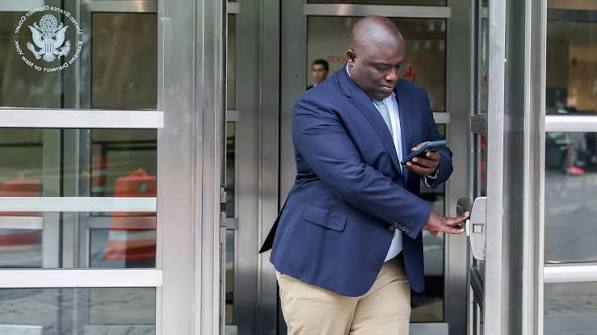

Ghanaian-American investment banker Asante Kwaku Berko has been convicted by a federal jury in the United States over his involvement in a bribery and money laundering scheme linked to the development of a power plant project in Ghana.
Berko, a dual citizen of the United States and Ghana, was found guilty on all charges, including conspiracy to violate the Foreign Corrupt Practices Act (FCPA), violation of the FCPA and money laundering conspiracy.
The verdict was delivered after a nine-day trial before United States District Judge Diane Gujarati at a federal court in Brooklyn, New York.
Also read: Gov’t urges Ghanaians to support ‘Service to the Soul’ national blood drive on August 8
The former Goldman Sachs executive now faces up to 30 years in prison when sentenced. He has been remanded pending sentencing.
According to prosecutors, Asante Kwaku Berko participated in a scheme to pay more than $1 million in bribes to Ghanaian government officials to influence the awarding and approval of a power plant project.
The project, involving Turkish energy company Aksa Enerji Uretim A.S. (Aksa), was expected to generate hundreds of millions of dollars in profits.
US prosecutors said Berko used his position as an investment banker to help secure and manage the agreement between the Government of Ghana and Aksa during a period when Ghana was facing a national energy crisis.
The United States Attorney’s Office for the Eastern District of New York said evidence presented during the trial showed that Berko and his co-conspirators made illegal payments to individuals at different levels of Ghana’s government.
Prosecutors alleged that the payments were intended to secure approvals and ensure that Aksa won the opportunity to build and operate the power plant.
The court heard that discussions took place over payments to senior government officials, advisers and other individuals connected to the approval process.
The case also involved allegations that some Ghanaian officials received benefits during an all-expenses-paid trip to Turkey to inspect power plant equipment.
Prosecutors said Asante Kwaku Berko attempted to conceal the bribery scheme from Goldman Sachs by misleading the company’s compliance team responsible for reviewing the transaction.
The former Goldman Sachs Executive Director was also accused of using personal email accounts instead of official company communication channels to discuss the deal and alleged bribe payments.
Authorities said the payments were disguised through shell companies, false invoices, nominee account holders and cash withdrawals in an effort to hide the source and purpose of the funds.
Goldman Sachs later withdrew from the transaction amid corruption concerns.
United States Attorney Joseph Nocella Jr. described the conviction as a major step in efforts to combat international corruption.
He said Berko abused his access to foreign government officials and his position in the investment banking sector to benefit financially from the scheme.
Assistant Attorney General A. Tysen Duva of the US Department of Justice’s Criminal Division said the conviction demonstrated that individuals who undermine fair competition through foreign corruption would face prosecution.
The Federal Bureau of Investigation (FBI) also highlighted cooperation between US and international agencies, including authorities in the United Kingdom, in securing justice in the case.
The Asante Kwaku Berko conviction has renewed attention on the role of international financial institutions and corporate actors in major infrastructure projects involving governments and foreign investors.
The case was investigated by the US Department of Justice, the FBI, and other international partners.
The prosecution was handled by the Business and Securities Fraud Section of the United States Attorney’s Office for the Eastern District of New York and the Criminal Division’s Fraud Section.
Following the guilty verdict, Asante Kwaku Berko remains in custody pending sentencing.
The former investment banker could face a maximum sentence of 30 years in prison for the charges relating to foreign bribery and money laundering.
The case represents one of the significant Foreign Corrupt Practices Act prosecutions involving a Ghana-related infrastructure transaction.
Myjoyonline