

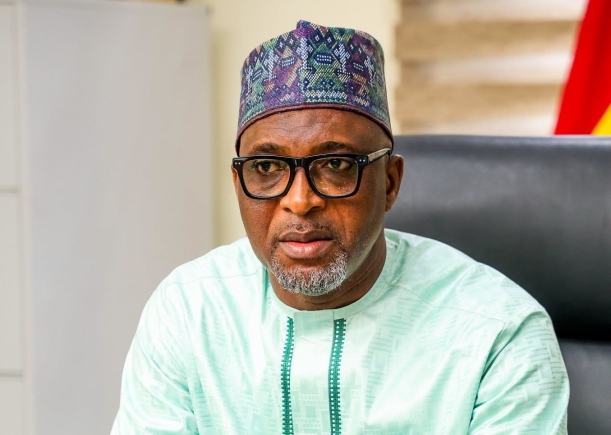

Interior Minister Mohammed-Mubarak Muntaka has disclosed that Ghana recorded cases of suicide among security personnel in 2025 and 2026, raising concerns about the welfare and mental health of officers within the country’s security services.
According to him, the reported incidents have reinforced the need for security agencies to pay greater attention to the psychological well-being of their personnel.
The government, he said, is taking steps to strengthen welfare support within the security services, including measures to help officers struggling with drug abuse.
Also read: Teachers suspend strike as public basic schools resume
The Minister disclosed these on Joy FM Super Morning Show on Monday, October 12, 2026.
He explained that security agencies have been dircted to establish dedicated desks to address personnel welfare issues beyond the conventional support systems.
The Minister assured that the initiative is to help identify and support officers facing challenges, including substance abuse, which he said has become a concern within some security institutions.
The comments came during a discussion on illicit drugs, recruitment into the security services and the government’s broader efforts to tackle substance abuse in Ghana.
Mr. Muntaka also revealed that the government is preparing a Cabinet document to make drug testing a mandatory requirement for entry into the public service.
He said the decision followed concerns raised during recent security agency recruitment exercises, during which more than 6,000 applicants were disqualified after failing drug tests.
The minister said the recruitment exercise had exposed the scale of the challenge and prompted the government to reconsider the medical screening requirements for prospective public servants.
He explained that previous medical examinations had not adequately covered drug testing and mental health assessments, despite concerns about substance abuse among some serving personnel.
The proposed policy, if approved by Cabinet, would initially cover recruitment into the public service, with the government considering extending the requirement to private-sector employment.
Muntaka said the government hopes the measure would discourage young people from using illicit drugs by making them aware of the potential consequences for future employment opportunities.
The Minister also outlined ongoing efforts to prevent drug abuse, particularly among young people and students.
He said the Narcotics Control Commission conducted more than 2,117 drug education activities across the country in 2025, targeting secondary schools, basic schools, churches and organised groups.
According to him, the government is increasingly concerned about reports of students not only using illicit substances but also bringing them into schools to sell to their peers.
He said authorities are working with school administrators and the Narcotics Control Commission to improve monitoring and prevent the spread of drugs within educational institutions.
Mr. Muntaka further disclosed that the government is working with 30 rehabilitation centres, most of which are operated by non-governmental organisations and faith-based institutions.
Plans, he said, are underway to establish a state-owned rehabilitation centre dedicated to the treatment and recovery of people struggling with drug addiction.
The Minister defended ongoing operations against the cultivation and distribution of illicit drugs, insisting that security agencies are destroying farms and making arrests.
He cited an incident in which officers reportedly recovered dried cannabis hidden inside a shrine, as well as cases in which ambulances were allegedly used to transport illicit drugs.
According to him, the government would continue to intensify enforcement, prevention and rehabilitation efforts as part of its broader response to drug abuse.