

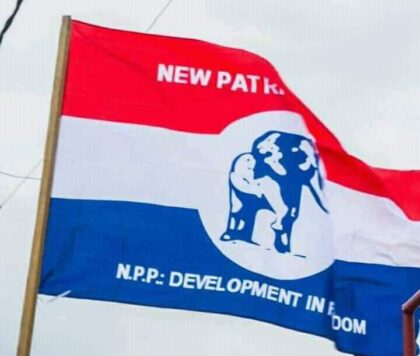

The opposition New Patriotic Party (NPP) has mounted a strong challenge to the Ghana Cocoa Board Bill, 2026, warning that key provisions could hurt cocoa farmers, weaken Ghana’s position in the international cocoa market and expose farmers to unnecessary criminal sanctions.
The party said it does not oppose reform of the cocoa sector, acknowledging the need to replace the outdated PNDCL 81 and improve traceability, value addition and farmers’ share of cocoa revenue.
However, it strongly objected to the manner in which the Bill was passed and several provisions it considers harmful to farmers.
Also read: Afenyo-Markin accuses gov’t of policy misalignment
The NPP said the COCOBOD Bill, 2026, which was passed in the last week of July under a Certificate of Urgency, was rushed through Parliament within days of being laid on July 28.
According to the party, neither of the two national cocoa farmer associations was consulted, while concerns raised by the Licensed Cocoa Buyers Association of Ghana (LICOBAG) were not incorporated.
It also said the Cocoa Hauliers Association was not consulted and that the 2026 Bill differed materially from the version previously reviewed by Parliament.
“A law made for cocoa farmers, without cocoa farmers, is not reform. It is imposition,” the NPP said.
The party raised concerns over Clause 57, which sets the producer price at not less than 70 per cent of the Gross Free On Board (FOB) price realised by COCOBOD.
While welcoming the statutory floor, the NPP questioned how the “realised Gross FOB” would be calculated and independently verified. It argued that unlike the observable world market price, the realised Gross FOB is an internal calculation involving forward contracts and is therefore largely controlled by COCOBOD.
The party is demanding that the computation and underlying contracts be published each season and independent audits be conducted before farmers’ prices are announced
The NPP further sounded the alarm over Clause 59, arguing that the inclusion of external marketing among activities that could be licensed may eventually open the door to private cocoa exporters.
The NPP defended the centralised marketing system through the Cocoa Marketing Company (CMC), arguing that it gives Ghana greater bargaining power, supports forward sales and strengthens the country’s ability to negotiate internationally.
It warned that fragmenting cocoa exports could undermine Ghana’s leverage in the global cocoa market.
The party also criticised Clause 81, which prohibits the destruction, uprooting, damaging or felling of cocoa trees without approval from COCOBOD, except for approved rehabilitation.
While acknowledging the need to prevent cocoa farms from being destroyed for illegal mining, the NPP argued that the provision could inadvertently criminalise legitimate farming practices such as thinning overcrowded trees and removing diseased trees.
It warned that delays in removing trees infected with swollen shoot disease could worsen the spread of the disease, particularly when about 90,000 hectares are awaiting rehabilitation.
The NPP also opposed the implications of Clause 85, which requires farmers and farms to be registered on the Cocoa Management System before they can legally produce, buy or sell cocoa.
The party said farmers should not be punished for administrative failures by COCOBOD, particularly where an enumerator has not yet reached a farmer or farm.
It called for the provision to be deferred until the government certifies that farmer registration is substantially complete.
The NPP questioned the practicality of Clause 106, which establishes a local processing threshold of at least 50 per cent of cocoa beans produced.
While supporting value addition, the party argued that Ghana’s main constraint is the price of cocoa beans rather than processing capacity.
It said Ghana has grinding capacity of about 504,780 tonnes annually, while recent grindings average between 210,000 and 220,000 tonnes. A 50 per cent processing requirement based on a 650,000-tonne crop would therefore require about 325,000 tonnes to be processed locally – a significant gap from current grinding levels.
The party has consequently called on President John Dramani Mahama to withhold assent and return the Bill for broader consultation. Among its demands are the narrowing of COCOBOD’s expanded mandate, independent auditing of the Gross FOB calculation, protection of CMC’s external marketing role, amendments to Clause 81, postponement of the farmer registration requirement, and greater clarity on pricing arrangements for cocoa supplied to local processors.
The NPP maintained that it supports reform but cannot support legislation it believes could criminalise legitimate farming practices, penalise farmers for registration gaps, weaken Ghana’s centralised cocoa marketing system and make farmers’ price entitlements difficult to verify.
“A law made for cocoa farmers, without cocoa farmers, is not reform. It is imposition,” the party reiterated.