


Ghana’s nuclear power ambitions have received a boost as experts at the Ghana Atomic Energy Commission (GAEC) have highlighted the safety, flexibility and training opportunities associated with small modular reactors (SMRs).
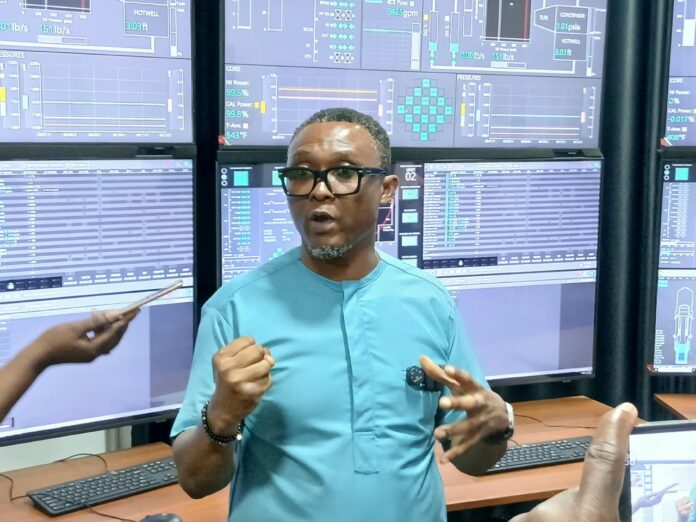
George Kofi Appiah, Manager for Localization and Stakeholder Support at the NuScale Energy Exploration (E2) Center at the Ghana Atomic Energy Commission (GAEC) in Accra, said the country is well positioned to use modern nuclear technology as it explores options for expanding its electricity generation capacity.
He was speaking to journalists from the Media for Nuclear Power Project on Tuesday, August 18, 2026, during a tour of facilities at GAEC.
Also read: Petroleum Commission reveals US$2.2bn savings for Ghana from oil sector oversight
Mr Appiah explained that the E2 Center houses a simulator designed to replicate the control room of a nuclear power plant. Although the facility is not an actual nuclear power plant, its simulator reproduces the operations and controls found in a real plant control room.
The facility was donated to Ghana by the United States Department of Energy to serve Ghana and the wider African subregion. He encouraged members of the public to visit the centre to gain a better understanding of how nuclear power plants are operated.
‘Nuclear power is safe’
Addressing concerns about nuclear safety, Mr Appiah maintained that nuclear power is safe when properly designed, operated and regulated. He cited Japan’s continued reliance on nuclear energy despite the Fukushima accident in 2011. Japan shut down several reactors following the disaster but has subsequently moved to restart some of them, demonstrating the continued importance of nuclear power.
He stressed that modern reactor designs incorporate advanced safety systems intended to prevent or mitigate the kinds of failures experienced at older facilities.
Mr Appiah explained that the Fukushima accident followed an earthquake and tsunami. The reactors automatically shut down after the earthquake, but residual heat still had to be removed. The facility relied partly on diesel generators to power cooling systems, but the tsunami damaged the generators, affecting cooling capabilities.
Modern reactor designs, including NuScale’s Small Modular Reactors technology, incorporate passive safety systems designed to operate without relying entirely on external power or human intervention. The technology also has mechanisms to remove heat in the event of coolant loss, providing additional time for operators to respond.
SMRs offer greater flexibility
A major advantage of SMRs is their flexibility. Mr Appiah explained that an SMR could be viewed as a large nuclear plant divided into several smaller modules, allowing power generation capacity to be added progressively. Rather than constructing an entire large reactor before it can begin supplying electricity, Small Modular Reactors can be deployed in stages. Once one module is operational, additional modules can be added as demand and financing permit.
This approach also simplifies maintenance. If one module is shut down for maintenance, the other modules continue running, meaning maintenance can be carried out without taking an entire large plant offline.
Mr Appiah said the size of nuclear generation units must be considered in relation to the stability of Ghana’s electricity grid. A single generating unit should generally not constitute more than about 10 per cent of total production capacity. Using Ghana’s approximately 5,000-megawatt capacity as an example, adding a 1,000-megawatt nuclear unit could present grid stability challenges. An SMR producing around 300 to 400 megawatts could provide greater flexibility and fit more comfortably within the grid’s requirements.
He stressed that detailed studies would still be required to determine the appropriate technology and capacity for Ghana, and the grid would need to expand alongside any major nuclear power development.
Ghana’s nuclear centre serves African countries
The NuScale centre is emerging as a regional training facility. Mr Appiah said participants from Nigeria, Kenya and Rwanda had already taken part in training activities. NuScale officials recently returned to Ghana to conduct further training, with discussions ongoing to provide virtual training for partner countries.
Mr Appiah said facilities such as the E2 Center provide an opportunity for the public to see how nuclear power plants operate from a control-room perspective without entering an actual plant.
As Ghana continues to explore nuclear power, experts say public education, grid preparedness, safety regulation and technical capacity will remain critical. The development of local expertise for small modular reactors could position Ghana as an important hub for nuclear power knowledge in Africa.