

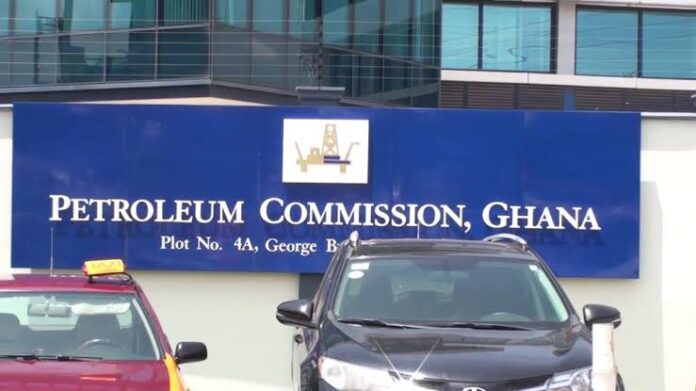

The Petroleum Commission says its oversight of Ghana’s upstream petroleum sector has generated about US$2.2 billion in savings and potential financial gains for the state, following reviews of field development plans, procurement processes and petroleum costs.
The disclosure was made by the Commission’s Chief Executive Officer, Emeafa Hardcastle, during the launch of activities to commemorate the institution’s 15th anniversary.
According to Hardcastle, the Petroleum Commission’s oversight of major oil and gas development projects has helped the state achieve approximately US$2 billion in savings.
Also read: GH¢22bn GoldBod loss: Minority demands probe after IMF Report
She said the Greater Jubilee Full Field Development Plan accounted for about US$1 billion of the savings recorded through reviews of development plans.
Hardcastle said a review of the Jubilee Plan of Development Phase 1A resulted in savings of approximately US$210 million.
The review of the TEN Plan of Development also generated about US$510 million in savings, while scrutiny of the OCTP SURF and T&I costs delivered an additional US$200 million.
“The Petroleum Commission has over the years maintained efficient stewardship of Ghana’s hydrocarbon resources and has saved the State millions of dollars,” Hardcastle said.
She added that the Commission’s interventions had contributed to enhanced revenue for the state from the exploitation of Ghana’s hydrocarbon resources.
Beyond development plans, the Commission has also intensified scrutiny of procurement and tender processes to ensure that petroleum operators deliver value for money.
The Petroleum Commission’s regulatory interventions have also extended to petroleum cost audits.
Hardcastle disclosed that a recent audit uncovered US$229 million in cost infractions in one of Ghana’s petroleum contract areas.
The amount has subsequently been removed from the pool of allowable petroleum costs.
According to the CEO, the move could generate additional financial benefits for the state through future Corporate Income Tax and Additional Oil Entitlement.
“These have since been struck out from the pool of allowable petroleum costs,” she said.
The Commission also reviews contractors’ work programmes and budgets as part of its regulatory responsibilities. This allows the regulator to monitor expenditure and ensure that costs incurred by contractors are consistent with approved activities.
Beyond cost savings, the Petroleum Commission says its regulatory mandate has contributed significantly to increasing Ghanaian participation in the upstream petroleum industry.
Since the introduction of the 2013 Local Content and Participation Regulations, the Commission says it has supervised the award of US$4.9 billion in contracts to indigenous Ghanaian companies.
The figure represents approximately 22% of total contracts awarded during the period.
Joint venture companies involving Ghanaian and international firms received a further US$7.9 billion, representing about 35% of total contracts.
Hardcastle said the Commission’s approach has been to deepen local participation and increase in-country value addition while ensuring that Ghana’s petroleum industry does not operate as an enclave economy.
She stressed the importance of ensuring that Ghanaian businesses benefit meaningfully from the country’s oil and gas resources.
The launch of the 15th anniversary activities brought together former Chief Executives of the Petroleum Commission, industry stakeholders and other key players in Ghana’s petroleum sector.
The anniversary provides an opportunity for the regulator to highlight its contribution to the management of Ghana’s upstream petroleum resources, including cost control, local content development and value creation for the state.
The Commission’s latest disclosure places its regulatory oversight at the centre of efforts to protect Ghana’s petroleum revenues and ensure that expenditure within the upstream sector delivers value to the country.
With billions of dollars in savings and contracts awarded to Ghanaian businesses, the Commission says its work remains focused on strengthening oversight while maximising the economic benefits of Ghana’s hydrocarbon resources.