

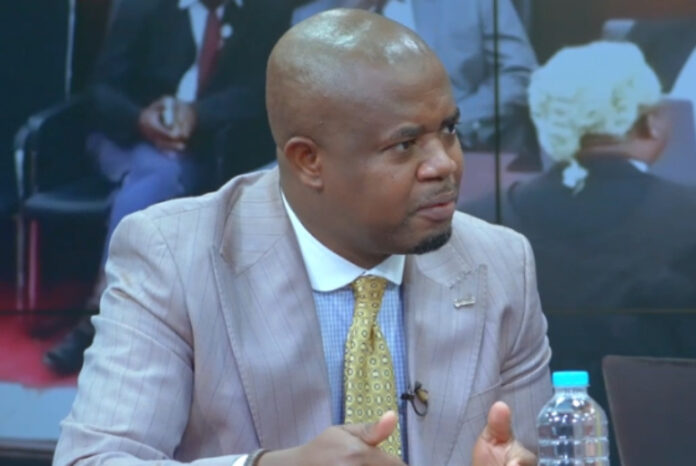

National Petroleum Authority (NPA) Chief Executive Officer, Edudzi Tamakloe, has urged Ghanaians to protect the country’s political cohesion and avoid rhetoric that could inflame tensions and trigger violence.
Speaking on TV3 on Saturday, August 29, Mr Tamakloe said while insults may not necessarily constitute a crime under the law, the context and consequences of inflammatory statements must be considered when assessing their potential impact on society.
He cited an example discussed on the programme in which an allegation or statement was repeated to President John Dramani Mahama, allegedly contributing to a chain of events that resulted in violence and ultimately the death of an individual.
Also read: Supreme Court nominees approved despite Minority’s nine-ground objection
Mr Tamakloe argued that isolating the initial insult from the events that followed would not provide a complete or fair assessment of the circumstances.
“Context is key for the purposes of, as it were, landing a crime,” he said.
He cautioned that treating political insults as entirely tolerable could inadvertently send the wrong message, particularly in Ghana’s highly charged political environment.
According to Mr Tamakloe, Ghana’s relative peace and political stability should never be taken for granted.
“The kind of political cohesion we enjoy in this country, may we not take it for granted,” he said.
He pointed to the 1994 Rwandan genocide as a stark example of how inflammatory rhetoric can contribute to devastating consequences. He recalled how radio broadcasts that dehumanised members of an ethnic group as “cockroaches” contributed to an environment that preceded mass violence and the deaths of hundreds of thousands of people.
Mr Tamakloe therefore appealed to politicians, media personalities and other influential voices to exercise responsibility when using public platforms.
He stressed that freedom of speech should not be interpreted as a licence to make statements that could endanger social harmony or provoke violence.
The NPA CEO said he personally discourages supporters from posting insulting or inflammatory comments on social media, noting that he has previously asked party members to delete posts he believed could create problems.
He also rejected claims made on the programme that an individual identified as Kevin had received “presidential treatment”, insisting that there was no evidence to support the allegation.
Mr Tamakloe maintained that claims of such nature should be backed by evidence if they are to be taken seriously.