

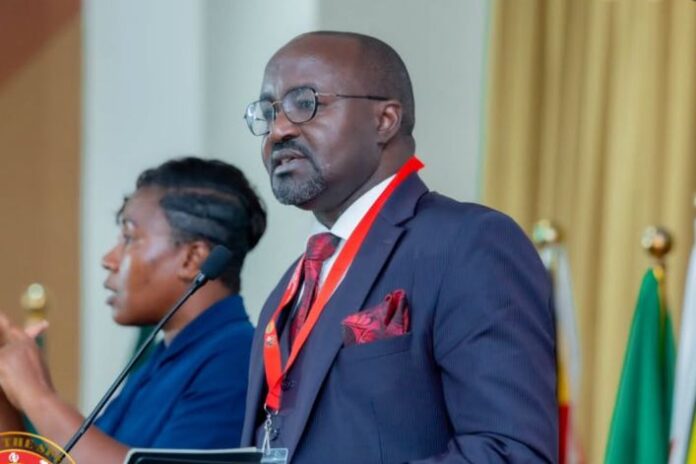

The Chairperson of the African Organisation of Public Accounts Committees (AFROPAC), Patrick Nsamba Oshabe, has raised concerns over Africa’s growing debt burden and servicing obligations and declining external financial support.
The developments, he said, are putting increasing pressure on essential public services across the continent.
He urged African parliaments to strengthen their oversight of government borrowing, debt restructuring agreements and tax policies to ensure that public resources are protected and used to advance national development.
Speaking at the 6th AFROPAC Conference in Accra on Monday, November 2, under the theme, “Oversight for Resilience: Strengthening Africa’s Public Accounts Committees Amid the Shifting Financial Landscapes,” the Ugandan legislator said Africa’s changing financial landscape requires stronger and more effective Public Accounts Committees capable of responding to emerging economic challenges.
Also read: Accountability without consequences is just documentation – Ampem challenges African PACs
According to him, rising debt-service obligations are squeezing national budgets allocated to critical sectors such as healthcare, education and infrastructure, while declining external support is creating additional difficulties for governments.
He lamented that the situation is being compounded by increasingly frequent and costly climate shocks, making prudent management of public finances more important than ever.
“In these conditions, every shilling and franc of public money must be raised and handled wisely, spent well, and fully accounted for,” he said.
Mr Nsamba Oshabe said the changing international financial environment also requires African parliaments to pay closer attention to developments in global debt and tax governance.
He cited the African Union’s adoption of the Common Africa Position on Debt in February 2026 and ongoing United Nations negotiations on a Framework Convention on International Tax Cooperation, with a final text expected in 2027.
He also drew attention to illicit financial flows, which he said are estimated to cost Africa close to US$89 billion annually.
The AFROPAC Chairperson stressed that these developments are not merely diplomatic issues but matters with direct implications for national budgets, public expenditure and the welfare of citizens.
He challenged parliamentarians, stating, “Are we scrutinising borrowing decisions in our respective parts? Are we examining the terms and implications of debt restructuring agreements? Are we holding governments accountable for tax exemptions, revenue losses, and the enforcement of tax laws?”
The Accra conference, he said, would provide an opportunity for delegates to examine the changing global tax and debt landscape and strengthen parliamentary oversight of resources allocated to essential sectors, including health and climate action.
Mr Nsamba Oshabe called for stronger accountability institutions, improved implementation of Public Accounts Committee recommendations and the use of digital tools to enhance parliamentary scrutiny.
He expressed hope that the discussions would help African countries develop stronger institutions capable of protecting public resources and building more resilient economies.