

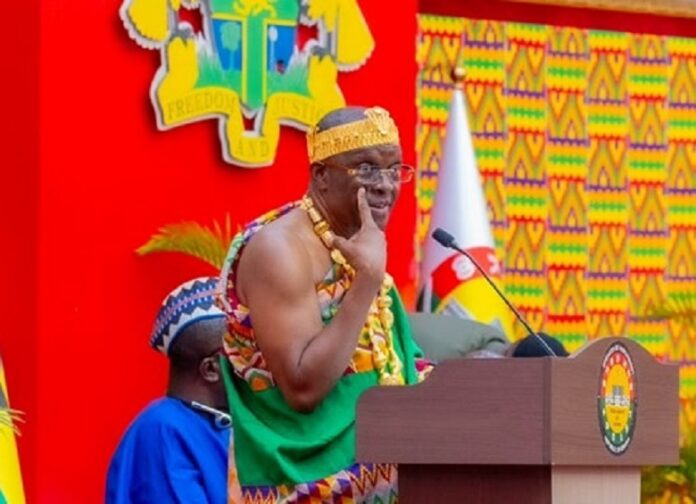

Speaker of Parliament Alban Bagbin has urged Members of Parliament and political actors to tone down abusive, insulting, and threatening language, warning that the worsening public discourse could undermine Ghana’s democracy.
According to him, the expansion of social media has widened democratic participation but has also created new avenues for insults, threats, ethnic insinuations and the spread of unverified allegations.
Freedom of expression, he said, remains fundamental to Ghana’s constitutional democracy, stressing that criticism of public officials, political disagreement, satire and dissent are legitimate.
Also read: Dr China wins grassroots backing as Eastern Region NPP Executives rally for General Secretary
However, he cautioned that such freedoms should not be used to justify degrading public discourse.
“Insult is not argument. Abuse is not scrutiny,” the Speaker said, stressing that political disagreements could be vigorous without becoming destructive.
Speaking during Parliament’s one-day emergency recall on Tuesday, September 29, 2026, Alban Bagbin said abusive public discourse should concern everyone, regardless of political affiliation.
He welcomed President John Dramani Mahama’s call for the Ghana Journalists Association (GJA) and the Media Foundation for West Africa (MFWA) to convene a national stakeholder engagement on hate speech, abusive online content and responsible digital communication.
According to Bagbin, the proposed national conversation must protect freedom of expression while addressing genuinely harmful content.
Parliament, he said, must also play an active role, particularly through its committees, including the Human Rights Committee.
Bagbin urged parliamentary committees not to wait for referrals before acting on alleged human rights abuses and other matters within their mandate.
He said Parliament should engage constitutional bodies, regulatory institutions and civil society organisations to assess the state of public discourse and whether existing laws and institutions are adequate.
The Speaker acknowledged that some language used by MPs both inside and outside the Chamber had fallen below the standards expected of elected representatives.
He said MPs could strongly criticise the government, opposition, Speaker, parliamentary leadership and state institutions without resorting to personal attacks.
Bagbin urged political party leaders not to reward politicians primarily for using provocative or “bitter” language, arguing that such practices encourage others to imitate them.
“Members of Parliament must lead by example,” he said.
He stressed that the responsibility applied equally to the Majority and Minority and extended to MPs’ conduct during parliamentary proceedings, committee meetings, press conferences, radio and television interviews and social media engagements.