

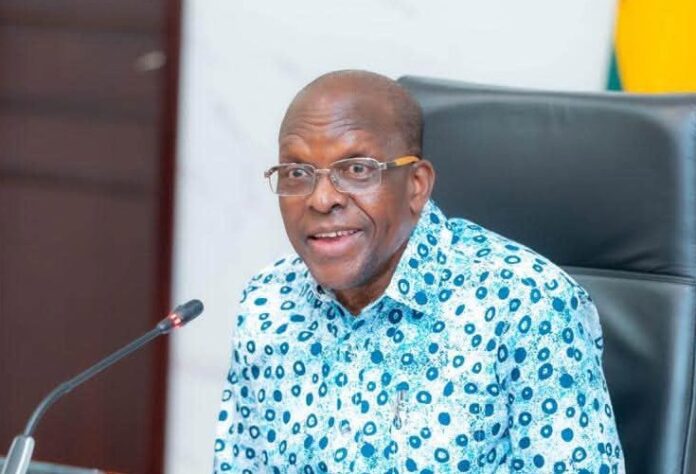

Speaker of Parliament Alban Sumana Kingsford Bagbin has backed calls for legislation to guarantee better service conditions for journalists in Ghana, arguing that improved welfare is essential to media independence, accountability, and the country’s democratic development.
He said Parliament is prepared to support efforts to develop legislative proposals that would help journalists earn decent livelihoods without depending on individuals and institutions they are expected to scrutinise.
He made the remarks when the President of the Ghana Journalists Association (GJA), Albert Kwabena Dwumfour, led a delegation to pay him a courtesy call and formally invite him to the association’s 30th Media Awards on November 7.
Also read: Chairman Wontumi: Prison inmates allegedly attempted to poison him
The Speaker stressed that journalism serves a critical public interest and should not be treated solely as a private commercial venture, particularly given the financial challenges confronting media organisations.
“While your products are critical public goods, they are not private business,” he said, highlighting the difficulties facing media houses, especially print publications, in securing sustainable funding.
According to Mr Bagbin, inadequate financial resources could undermine the ability of journalists to perform their professional duties effectively, particularly when reporting on public officials, state institutions and matters of national interest.
He argued that better conditions of service for journalists would help strengthen media independence and reduce the risk of professional compromise arising from financial insecurity.
The Speaker drew parallels between the challenges facing journalists and those confronting parliamentary committees responsible for scrutinising government institutions.
He explained that some parliamentary committees lacked sufficient funding to undertake oversight activities and are sometimes compelled to rely on sponsorship from the same institutions they were expected to investigate.
“I mean, how can you do it?” he asked, questioning how accountability could be effectively enforced when oversight institutions depended financially on those they were mandated to scrutinise.
Mr Bagbin said the situation requires a broader national discussion about how public resources could be allocated to support institutions that promote transparency, accountability and democratic governance.
He maintained that journalists, like parliamentary oversight committees, needed adequate institutional and financial support to carry out their responsibilities without compromising their independence.
The Speaker described the media as an indispensable partner of Parliament, noting that journalists play a vital role in exposing wrongdoing, informing public debate and strengthening governance.
The press, he said, helps bring clarity to the often polluted atmosphere of politics and governance, making responsible journalism essential to Ghana’s democratic progress.
Mr Bagbin urged journalists to intensify public education about their profession and its contribution to national development, arguing that greater public understanding could help reduce hostility towards media practitioners.
He also condemned attacks on journalists, questioning why individuals resort to violence against media workers performing their professional duties.
The Speaker’s remarks highlighted the need for stronger protection for journalists, alongside improved working conditions, to enable them to investigate and report on issues of public interest without intimidation.
He further expressed concern about the challenges of maintaining professional standards in an increasingly digital media environment, where technological developments have made it easier for people without formal journalistic training to publish information and identify themselves as journalists.
He said the situation placed additional responsibility on the Ghana Journalists Association and other professional bodies to promote ethical journ