
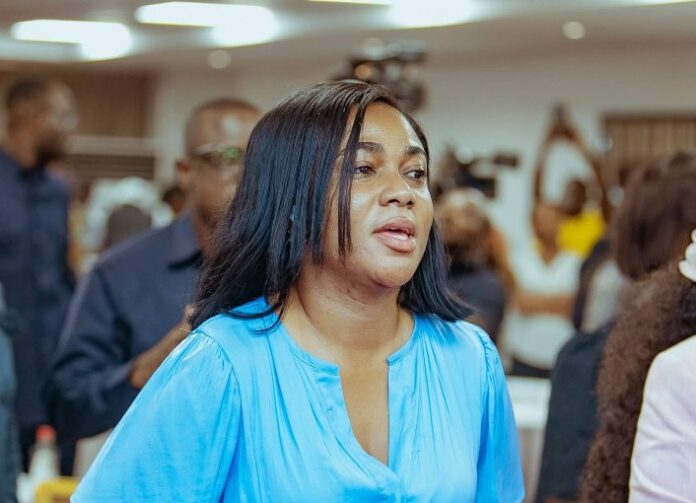

The Member of Parliament for Afigya Sekyere East and Ranking Member of Parliament’s Committee on Employment, Labour Relations and Pensions, Mavis Nkansah Boadu, has raised concerns over the widening gap between public sector salary adjustments and rising household utility costs, warning that Ghanaian workers are losing purchasing power.
According to the MP, electricity tariffs have increased by nearly 29% since January 2025, while cumulative public sector wage adjustments over the same period stand at approximately 20%.
In a press statement issued on Friday, October 30, 2026, Mavis Nkansah Boadu said the disparity highlights the growing financial pressure on workers, particularly teachers, nurses and civil servants, who must contend with rising electricity bills alongside increasing costs of water, rent, transportation and cooking gas.
Also read: Afenyo-Markin challenges NDC over ‘accountability double standards’
She described the newly signed Multi-Year Public Service Remuneration Agreement covering 2027 and 2028 as concerning, arguing that the proposed salary adjustments do not adequately address the rising cost of living.
The agreement, finalised on October 28, provides for an 8% increase in base pay and a 1% adjustment for conditions of service in 2027, followed by a 10% salary adjustment in 2028.
Mavis Nkansah Boadu noted that the 10% and 9% salary adjustments granted to public sector workers in 2025 and 2026, respectively, have failed to sufficiently protect their purchasing power against rising household expenditure.
Citing electricity tariff adjustments announced throughout 2025, the Afigya Sekyere East MP said electricity prices increased by 14.75% in May, 2.45% in July and another 1.14% in October.
She argued that the cumulative effect of the adjustments amounted to nearly 19% in 2025 alone, significantly exceeding the 10% salary increase granted to public sector workers that year.
She pointed to developments in 2026, when electricity tariffs increased by 9.86% in January before a 4.81% reduction in April and a subsequent 3.49% increase in July.
According to her assessment, the combined adjustments have pushed electricity costs to approximately 29% above their January 2025 levels.
The Ranking Member also expressed concern about water tariffs, citing a 4.02% increase in May 2025 and a 15.92% adjustment in January 2026. Although tariffs were reduced by 3.06% in April, another 0.85% increase took effect in July.
She estimates that water tariffs are now approximately 18% higher than they were at the beginning of 2025.
Beyond utility bills, Mavis Nkansah Boadu cited an 8% increase in public transport fares effective September 26, 2026, with some short-distance fares reportedly recording increases of between 10% and 12%.
She also stressed industry projections of an approximately 18.5% increase in liquefied petroleum gas (LPG) prices during the October 16 pricing window, alongside rising rental costs and a 15% increase in mobile data charges introduced in July 2025.
The MP accused the government of exercising wage restraint while essential household expenses continue to rise, arguing that the situation places a disproportionate economic burden on Ghanaian workers.
She called for future wage negotiations to consider the cumulative effects of utility tariff adjustments and increases in the prices of essential commodities rather than relying exclusively on headline inflation projections.
Mavis Nkansah Boadu demanded an immediate review of the public service remuneration framework to establish what she described as a living wage capable of protecting workers’ purchasing power.
She maintained that Ghanaian workers should not be expected to absorb repeated increases in the cost of essential services while receiving salary adjustments that fail to adequately reflect the economic realities confronting their households.