

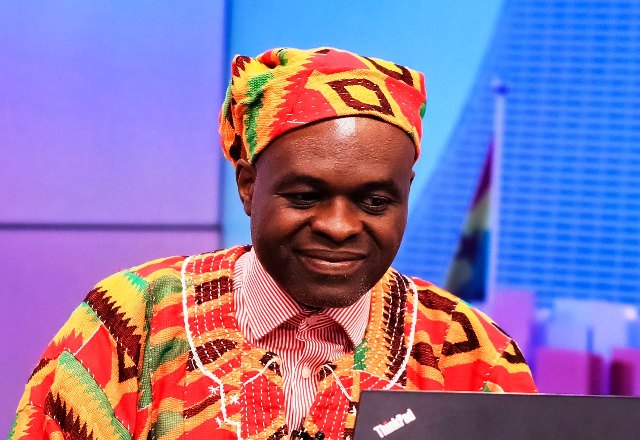

Private legal practitioner Martin Kpebu has announced plans to organise a demonstration in early 2027 to demand financial compensation from Western countries for the transatlantic slave trade and its devastating impact on Africa.
According to him, an apology from countries that benefited from slavery would not be sufficient to address the historical injustices suffered by Africans, insisting that meaningful financial compensation must follow.
Speaking on TV3’s ‘The Key Points’ Saturday morning analytical talk show, Mr Kpebu urged Ghanaians to support the campaign, arguing that the demand for reparations should not be left solely in the hands of President John Dramani Mahama or successive governments.
Also read: Electricity tariffs up nearly 29%, wages crawling behind – Mavis Nkansah Boadu
He said the planned demonstration would mobilise citizens and increase pressure on Western countries to acknowledge their responsibility for the consequences of the slave trade.
“This is not a fight for one man. You need a nation,” he stressed, arguing that widespread public participation would strengthen Ghana’s position in international discussions on reparatory justice.
Mr Kpebu maintained that the transatlantic slave trade deprived Africa of generations of productive labour, human resources and development opportunities, while European and American societies benefited from the exploitation of enslaved Africans.
He insisted that countries responsible for the historical exploitation must provide substantial compensation to support development efforts across the continent.
Although he acknowledged that Western countries might not be able to settle the entire historical debt immediately, he argued that a reasonable and structured compensation arrangement could serve as a starting point.
The lawyer welcomed discussions about a possible apology from British Prime Minister Keir Starmer but maintained that an apology without financial compensation would be inadequate.
He stressed former President Nana Addo Dankwa Akufo-Addo’s efforts to advance the campaign internationally, questioning whether proposals such as scholarship endowments and the return of African cultural artefacts adequately reflect the scale of the historical injustice.
Mr Kpebu described a reported $100 million scholarship endowment as insignificant compared with the wealth generated through centuries of enslaved African labour.
Beyond the planned demonstration, he called for sustained public education on the transatlantic slave trade and colonialism to deepen understanding and encourage national participation.
He urged Ghanaians to defend their rights through peaceful advocacy, emphasising that the struggle for historical justice should not involve violence.