

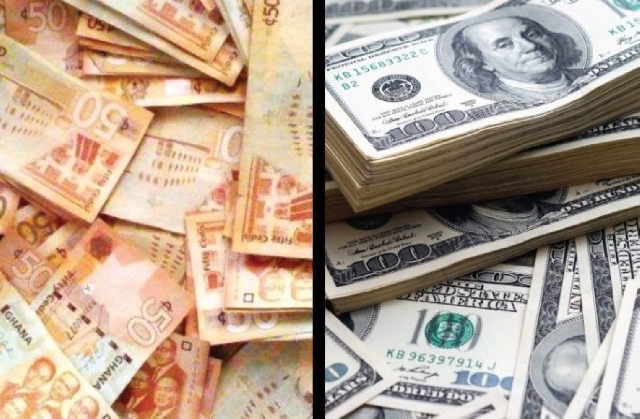

Cedi depreciation against the US dollar has widened to 10.6 per cent in November 2026, from 9.5 per cent in September, as renewed pressure on foreign exchange supply weighs on the local currency.
The latest Summary of Economic and Financial Data released by the Bank of Ghana (BoG) shows that the Cedi traded at GH¢11.69 to the US dollar in November, compared with GH¢11.66 in September.
The local currency also recorded losses against other major international currencies, reflecting continued challenges in the domestic foreign exchange market.
Also read: FABAG proposes cocoa-style Rice Board to guarantee prices for Ghanaian farmers
Against the British pound, the cedi depreciated by 9.2 per cent on the interbank market, trading at GH¢15.47. It also lost 5 per cent against the euro, which traded at GH¢12.92 during the period.
The cedi’s performance reflects a challenging year for the local currency, which has experienced periods of depreciation and intermittent recoveries, partly supported by foreign exchange interventions by the Bank of Ghana.
The outlook for the Ghana cedi in 2027 also points to further weakness, with Fitch Solutions projecting that the local currency will average GH¢12.40 to the US dollar next year.
The research firm attributes the projected depreciation partly to an expected moderation in international gold prices and government efforts to rebuild the country’s foreign exchange reserves.
Associate Director at Fitch Solutions, Mike Kruiniger, said these developments could reduce the supply of foreign currency on the domestic market and place additional pressure on the cedi.
“We expect to see the currency weaken a little bit, and that is going to bring back some important price pressures next year,” he said.
Mr Kruiniger explained that the shift in foreign exchange intermediation from the Bank of Ghana to the Ghana Gold Board, combined with lower international gold prices and reserve accumulation under the Ghana Reserve Accumulation Programme, could constrain dollar supply.
He added that a stronger US dollar could further push international gold prices down, potentially reducing Ghana’s gold export earnings and limiting foreign exchange inflows.
The projected depreciation of the cedi could have implications for businesses and consumers, particularly those dependent on imported goods and industrial raw materials.
A weaker local currency generally increases the cost of importing goods, machinery and production inputs, potentially raising operating costs for businesses.
These additional costs could eventually be passed on to consumers through higher prices, creating renewed inflationary pressures.