

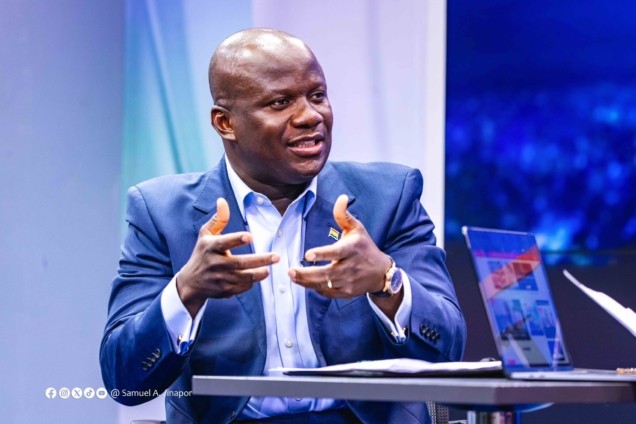

The Ranking Member of the Foreign Affairs and Regional Integration Committee in Parliament, Samuel Abu Jinapor, has questioned the Mahama administration’s decision to spend GH¢720 million on a new presidential jet.
He argued that the government should prioritise spending on productive sectors of the economy and address the concerns of workers, unemployed young people and other Ghanaians struggling with economic difficulties instead of committing substantial public funds to acquiring a new presidential aircraft.
Speaking on JoyNews’ The Pulse on Tuesday, November 17, the former Lands and Natural Resources Minister questioned the justification for the expenditure, particularly at a time when several public sector workers are demanding better remuneration, allowances and improved working conditions.
Also read: NDC disqualifies 23 aspirants, clears 98 for national executive elections
Mr Jinapor cited the financial challenges confronting judicial service workers, teachers and nurses, arguing that the government should be more sensitive to the competing demands on the public purse.
He also pointed to the high levels of youth unemployment and rising living costs, insisting that public resources should be channelled into areas that could stimulate economic growth, create jobs and improve the livelihoods of ordinary Ghanaians.
According to him, the GH¢720 million earmarked for the presidential jet could have been directed towards interventions with more direct benefits for the population.
He also questioned the government’s claim that Ghana’s improving economic conditions justified the acquisition, arguing that the expenditure appeared difficult to reconcile with the concerns of workers seeking better conditions of service.
Mr Jinapor challenged the government’s broader spending plans for the acquisition of aircraft, citing comments by Foreign Affairs Minister Samuel Okudzeto Ablakwa about funds approved by Parliament for the procurement of two jets and four helicopters.
He said the total amount programmed for the aircraft acquisitions was US$1.2 billion, which he estimated at approximately GH¢14 billion.
“The Minister is telling us that, in fact, the money that was approved by Parliament, the money that has been programmed to purchase two jets and four helicopters, is 1.2 billion United States dollars. If you convert it to Ghana cedis, it’s 14 billion Ghana cedis,” he said.
Mr Jinapor questioned why the government would commit such resources to aircraft acquisitions while workers across various sectors continued to raise concerns about their welfare.
“The Minister is telling us that the economic conditions of Ghana are so good,” he said, adding that the administration should have offered a different justification for the presidential jet purchase.
He maintained that the government must account for its spending priorities, particularly when the country continues to face demands for employment opportunities, improved public services and better conditions of service for workers.