

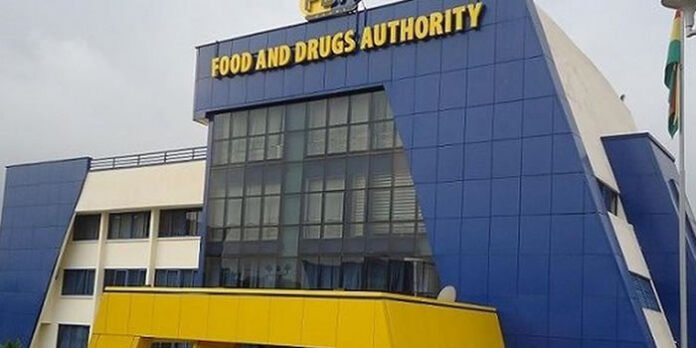

The Food and Drugs Authority (FDA) is expanding enforcement of food hygiene permits to cover kitchens in schools, hospitals and clinics nationwide following preliminary inspections that uncovered poor sanitary conditions in several institutional catering facilities.
The move is aimed at strengthening food safety standards and protecting students, patients and healthcare workers from foodborne illnesses.
Briefing a parliamentary committee during a review of its operations, FDA officials said enforcement had traditionally focused on restaurants and hotels. However, preliminary assessments of institutional kitchens revealed the need to extend regulatory oversight to schools and healthcare facilities.
Also read: BOST, NPA could ‘exist only on paper’ without Parliament’s help – Sammy Awuku warns
Management disclosed that the authority had engaged the Ministry of Education to compile a comprehensive database of schools as part of efforts to identify facilities requiring food hygiene permits.
The FDA is also preparing to license hospital canteens across the country to ensure that food preparation and handling meet required safety standards.
The initiative is expected to improve compliance with food safety regulations while reducing the risks associated with unhygienic food preparation in institutions serving large numbers of people.
The authority said the expanded enforcement programme would also strengthen its internally generated funds (IGF) as it works towards reducing dependence on government subvention.
As part of its financial sustainability strategy, the FDA is conducting a 10-year cost and revenue analysis with technical support from the World Health Organization (WHO).
Officials said the assessment is expected to be completed by May next year and will provide a roadmap for the authority’s transition towards financial autonomy.
Meanwhile, the FDA disclosed that its post-market surveillance activities had uncovered adulterated products containing unapproved substances, including orthodox medicines and caffeine.
The discoveries resulted in the closure of several facilities involved in the production or handling of the offending products.
The authority said its surveillance activities remain important in identifying unsafe products on the market and protecting consumers from potential health risks.
During the parliamentary briefing, management also explained its GH¢170 million cash balance, clarifying that the amount largely comprised restricted donor funds and money earmarked for constructing regional offices.
The funds are held at the Bank of Ghana in accordance with statutory requirements and are not entirely available for unrestricted spending.
The expanded food hygiene permit programme is expected to bring more institutional kitchens under formal regulatory supervision and strengthen food safety enforcement across Ghana.
By Alhassan Sadat