

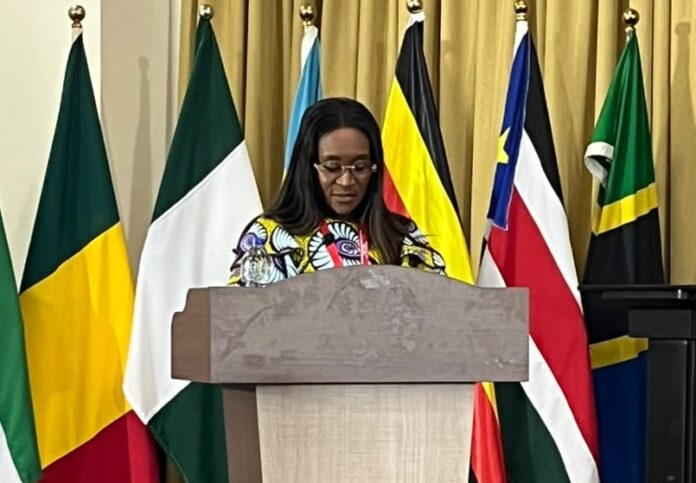

Ghana’s Public Accounts Committee (PAC) Chairperson and African Organization of Public Accounts Committees (AFROPAC) Deputy Chairperson, Abena Osei Asare, has challenged African Parliaments to translate the commitments in the Accra Declaration into concrete actions.
She warned that accountability must be measured by results rather than the number of audit reports produced, and cautioned that the declaration would only become meaningful if participating countries implemented its commitments.
The Atiwa East MP was speaking at the closing session of the AFROPAC conference and general meeting in Accra on Wednesday.
Also read: Caleb Yirenkyi makes 10-man shortlist for CAF Young Player award
She charged delegates to reaffirm their collective determination to strengthen parliamentary oversight, protect public resources and ensure that accountability delivers tangible benefits to citizens.
“A declaration is only as powerful as the actions that follow it. And that brings me to one simple question: when we meet again, what will we have to show for our time here in Accra?” she asked.
Abena Osei Asare cited the Auditor-General’s revelation that only 41.8 per cent of audit recommendations had been implemented in Ghana, describing it as evidence of a broader accountability challenge across Africa.
She said the effectiveness of Public Accounts Committees should not be judged by the number of hearings conducted but by the corrective actions taken afterwards.
“We have become good at identifying the problems; we must become better at fixing them also,” she stressed.
Outlining the declaration’s priorities, she identified four major commitments requiring stronger parliamentary attention.
The first is improved oversight of public debt and fiscal risks, including government borrowing, debt restructuring and financial guarantees, to prevent future generations from inheriting unaccountable financial burdens.
The second focuses on protecting Africa’s revenues through closer scrutiny of tax exemptions, revenue leakages and illicit financial flows.
The third concerns value-for-money oversight, particularly in health and climate financing, to ensure public expenditure delivers intended services and improves people’s lives.
The fourth seeks to strengthen the implementation of audit recommendations through clear institutional responsibilities, realistic deadlines, follow-up mechanisms and verifiable evidence of compliance.
Abena Osei Asare welcomed a proposal for AFROPAC to develop practical guidelines within 18 months to safeguard parliamentary oversight from political interference and instability.
“Oversight must remain strong regardless of who holds political power. Accountability must outlive governments and political cycles,” she stated.
She also disclosed plans for a regional digital knowledge hub and implementation tracking system to promote information sharing and monitor audit recommendations.
The PAC Chairperson urged Parliaments to communicate audit findings in simple language to ensure citizens understand financial irregularities and corrective actions.
She urged delegates to make the Accra Declaration a living commitment rather than another document gathering dust.
“People do not judge accountability by the number of reports we write. They judge it by the difference we make,” she emphasised.