

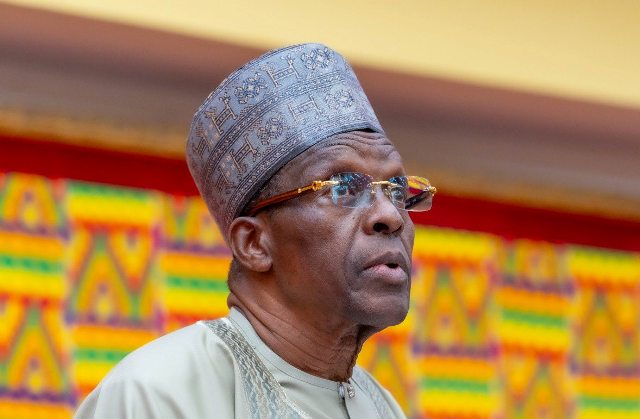

Speaker of Parliament, Alban Sumana Kingsford Bagbin, has urged parliamentary legal counsel across Africa to uphold ethics, integrity and accountability, warning that independent legal advice is essential to protecting constitutional democracy and restoring public confidence in Parliament.
Parliamentary lawyers, he said, must resist political pressure and remain impartial, stressing that their ultimate responsibility is to Parliament as a constitutional institution, the Constitution and the public interest rather than the interests of the governing party or opposition.
Mr Bagbin made the call in a speech delivered on his behalf by the Clerk to Parliament, Ebenezer Ahumah Djietror, at the 8th Africa Colloquium of Legal Counsel to Parliaments, held under the theme, “Ethics, Integrity and Legal Accountability”.
Also read: Cocaine probe motion: My ruling is not a shield for wrongdoing – Bagbin warns
The opening of the Colloquium was attended by the Attorney General and Minister of Justice, Majority and Minority Leaders, Principal Officers of Parliament, Council members, Secretariat staff and delegates from Parliaments across Africa.
According to the Speaker, political promises alone could not deliver sustainable development without clear, enforceable and constitutionally sound laws.
He described parliamentary legal counsel and legislative drafters as indispensable to translating government policies into effective laws that protect public resources, manage natural resources and safeguard vulnerable citizens.
“Your ultimate responsibility is to the institution of Parliament, the Constitution, and the public interest that Parliament exists to serve,” he stressed.
The Speaker expressed concern about declining public confidence in African parliaments, citing Afrobarometer findings showing that trust in Parliament fell from 52 per cent in 2011–2013 to 33 per cent in 2021–2023 in countries surveyed consistently.
He said public trust depended on the quality of legislation, fair parliamentary procedures, effective oversight, responsible management of public resources and adherence to ethical standards.
According to him, unclear laws, unmanaged conflicts of interest and the absence of meaningful consequences for misconduct could deepen public distrust and undermine democratic legitimacy.
Mr Bagbin cautioned against selectively seeking legal opinions to justify predetermined political decisions, warning that such practices could expose Parliament to constitutional challenges and damage institutional credibility.
He proposed clear written instructions for legal opinions, peer reviews, documentation of competing legal views, conflict-of-interest declarations and safeguards for lawyers who provide professionally defensible advice in good faith.
He also stressed that parliamentary lawyers must apply consistent legal standards regardless of the political interests affected by their advice.
Majority leader James Agalga, in his speech, rejected suggestions that parliamentary majorities and executives should view independent parliamentary legal counsel with apprehension.
He argued that effective governance depended on institutional stability, respect for the law and legislation grounded in constitutional principles.
According to him, complex reforms, fiscal policies and bilateral investment agreements require rigorous legal scrutiny rather than uncritical approval.
Parliamentary counsel, he said, must therefore identify constitutional vulnerabilities, improve legislative language and ensure that proposed laws can withstand judicial scrutiny.
Mr Agalga pledged support for improved conditions of service, modern research facilities, competitive remuneration and sustainable opportunities for continuing legal education and professional development.
He said such investments are necessary to attract and retain highly qualified legal professionals within African parliamentary institutions.
Minority Leader Alexander Afenyo-Markin, his speech, acknowledged that parliamentary legal counsel works at the centre of political contestation, often facing pressure from parliamentary majorities and executives seeking legal flexibility or advantages in legislation.
He urged counsel members to refuse to draft provisions inconsistent with constitutional requirements and to provide honest, independent advice even when their conclusions conflicted with the preferences of influential political actors.
He cautioned against the manipulation of parliamentary procedures to marginalise minority voices or restrict legitimate debate and scrutiny.
According to him, the independence of parliamentary legal counsel is necessary to ensure that constitutional safeguards remain effective even when governing parties enjoyed parliamentary majorities.
Mr Afenyo-Markin emphasised that non-partisanship should not be mistaken for passivity, arguing that legal counsel hsd an important responsibility to protect democratic principles and constitutional rights.
Attorney General and Minister of Justice, Dominic Ayine, in his speech cautioned against external influence from interest groups, development partners and commercial actors involved in legislative processes.
He urged parliamentary lawyers to identify and declare conflicts of interest to protect the integrity of their advice.
He stressed the use of generative artificial intelligence in legislative research and drafting, warning that automated tools could produce fabricated legal authorities or expose confidential parliamentary documents when sensitive material was uploaded to public platforms.
He encouraged delegates to consider developing a common African protocol governing the use of artificial intelligence in parliamentary legal services, with appropriate human oversight and verification of AI-generated material.
He urged participants to strengthen professional standards and institutional safeguards to ensure that parliamentary legal services across Africa remain independent, ethical and responsive to constitutional requirements.