

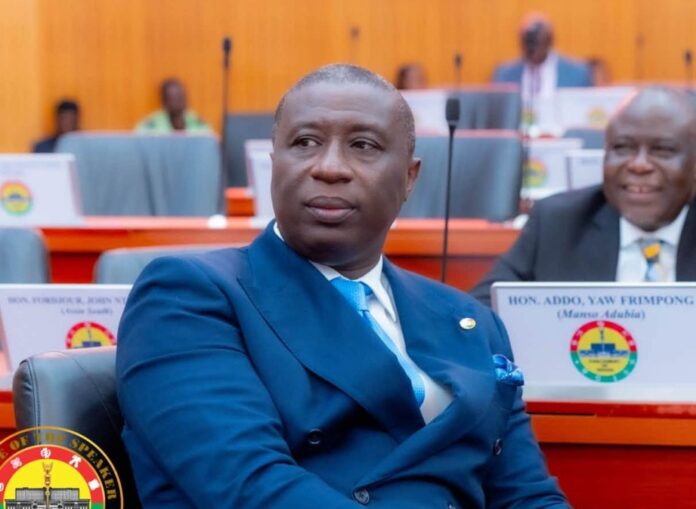

Okaikwei Central MP Patrick Yaw Boamah has challenged Finance Minister Dr Cassiel Ato Forson over the government’s proposed procurement reforms, questioning the consistency between the measures outlined in the 2026 Mid-Year Budget Review and selected projects allegedly being undertaken through single-source and restricted tendering procedures.
Speaking on Tuesday during debate on the 2026 Mid-Year Budget Review presented by the Finance Minister to Parliament, the New Patriotic Party (NPP) lawmaker referred Parliament to paragraphs 465 and 466 of the 2026 Mid-Year Budget Review, which outline proposed measures aimed at improving procurement efficiency.
According to him, the government plans to shorten procurement lead times, limit the use of single-source procurement and tighten restricted tendering.
Also read: Digital finance fraud cases rise 48% in 2025 – BoG raises alarm
Mr Boamah, however, questioned the consistency of those proposals with procurement arrangements he attributed to projects in the constituency of the Finance Minister.
He cited the Mankessim-Ajumako-Swedru Road project, which he said stretches about 111 kilometres and is expected to cost approximately US$250 million, alleging that a single-source procurement process was used.
He also mentioned the proposed construction of a military barracks in Ajumako and a specialist hospital project, which he claimed is being undertaken through arrangements that appeared inconsistent with the government’s stated procurement reforms agenda.
According to Mr Boamah, the specialist hospital project is estimated at GH¢850 million and is allegedly being pursued under a restricted tendering arrangement.
“If the Minister comes to tell us that he is tightening procurement rules and regime, then I don’t believe in what he is talking about,” Mr Boamah told Parliament.
The NPP legislator also questioned the government’s decision to site major projects in Ajumako, arguing that residents needed employment opportunities and other forms of economic support.
He said the people of Ajumako needed jobs and questioned the prioritisation of a military barracks in the area.
Mr Boamah, however, acknowledged the potential importance of the specialist hospital project but argued that other pressing concerns, including the payment of cocoa farmers, should also be addressed.
“The cocoa farmers in Ajumako want to be paid. That is what Ghana needs,” he said.
Mr Boamah also turned his attention to Ghana’s tree crops sector and the government’s plans to revive the oil palm industry.
He reminded Parliament that MPs had passed the Tree Crops Development Authority Act, which included oil palm among the crops covered by the legislation.
The Finance Minister, he said, had indicated in the 2026 Budget that the government intended to commit more than US$500 million towards reviving the oil palm sector.
The Okaikwei Central MP also criticised the government over its handling of job creation, public sector salaries and outstanding payments to cocoa farmers.
Mr Boamah said the government had raised significant revenue but is still unable to adequately address concerns affecting doctors, nurses and teachers.
“Mr Speaker, a government that has raised so much money and cannot even pay doctors, nurses and teachers, and the Minister is very comfortable reporting this to us,” he said.
He also questioned the government’s failure to report progress on its campaign promise to create 800,000 jobs, stressing that the three-shifts pledge has become a mirage for young Ghanaians