


A little over a week ago, on October 14, 2026, to be precise, I thought I had woken up to just another autumn morning, with its usual grey weather in Bonn, Germany. I was feeling apprehensive about switching on the television to watch the news for fear of seeing the same predominant images of turmoil around the world: the genocide in Gaza; the senseless bombings in Lebanon despite a so-called ceasefire; the wanton destruction and untold hardships caused by Russia’s war on Ukraine; fighting on the Arabian Peninsula; and the unsafe passage through the Strait of Hormuz, among others.
So, I opted instead to swipe through my mobile phone, which had the advantage of bringing me news from home in Ghana first. Sadly, I was hit by bad news all the same.
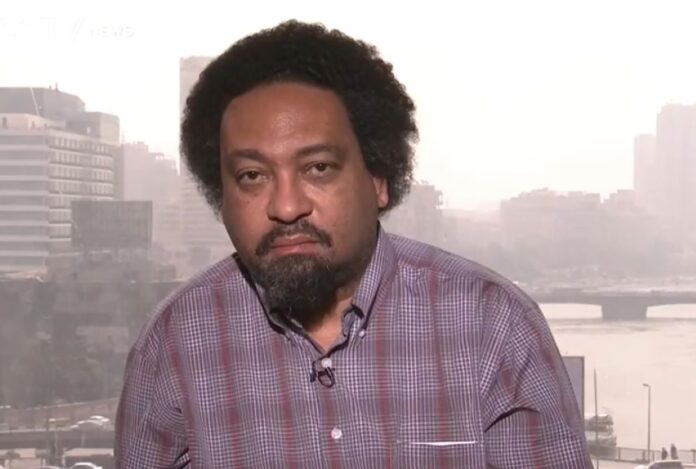
News had emerged of the death of Dr. Gamal Gorkeh Nkrumah, the first child of Ghana’s first President, Osagyefo Dr. Kwame Nkrumah, and his Egyptian wife, Fathia. The late Gamal, who died in Cairo, Egypt, was a journalist and editor of international affairs at the prominent Egyptian weekly newspaper Al-Ahram. He was a staunch anti-colonialist and Pan-Africanist. He has since been buried in Egypt in accordance with Islamic traditions.
Also read: Front Pages: Top newspaper headlines for Saturday, 24th October 2026
I preferred to write this tribute after his burial to respect the general request for privacy by his close family during their period of grief. I extend my heartfelt condolences to them, especially his sister, Samia Yaba, whom I have never met but with whom I know I share the same birthday—June 23.
I cannot claim to have known the late Gamal very well. However, my affinity with him compels me to write this tribute. I have always felt deep sympathy for him and his siblings because of the trauma and agony they may have suffered as children when their father was overthrown, publicly humiliated, vilified, and denigrated, amid vigorous attempts to blot his name out of history.
Besides, ever since I was elected Deputy General Secretary of the Cairo-based Union of African Journalists (UAJ) in 1995, I have cherished fond memories of the late Gamal. During that period, I paid him an unannounced courtesy call and was struck by how affable he was, despite the little time he could spare because of other engagements that day. We were also both firstborns and journalists.
The late Gamal was the first of three people to be made honorary members of the Ghana Journalists Association (GJA) in 1994, when I was serving my first term as General Secretary under the Kabral administration. The gesture was unprecedented in the annals of the GJA. The other two were the late Mr. I. K. Gyasi, a columnist for The Ghanaian Chronicle, and Kwasi Afriyie Badu, Esq., Chief Executive Officer of KAB Governance Consult.
Last but not least, I greatly admired Gamal’s father for his visionary leadership in Ghana’s independence and development, African emancipation and Pan-Africanism. His leadership earned him recognition when listeners of the BBC World Service voted him the “greatest African of the millennium” in 2000.
A number of framed photographs and paintings hang on the walls of my living room as memorabilia. However, the smallest of them all is the most iconic and significant to me. It is my father’s membership certificate of the Convention People’s Party (CPP), signed by Gamal’s father, Osagyefo Dr. Kwame Nkrumah himself.
That certificate was passed on to me by my dear mother, of blessed memory, after my beloved father, Mr. Henry Kwaku Blewu, died in 1992. My father was once the secretary of the John Sarbah Road area cell of the CPP in the Takoradi suburb of Esikafo Ambatem.
After passing his Middle School Form Four Certificate examination, my father had migrated from his hometown of Alakple in the Volta Region to Takoradi in the Western Region in search of employment at the Takoradi Harbour. He secured a job as chief clerk in the office of Woermann Line, a German shipping company based in Hamburg. It was while pursuing further studies at the Takoradi Workers College in the late 1940s that he became secretary of a CPP cell.
My mother, Mrs. Alice Afi Blewu, was a nurse-midwife at the time. Although she was not as politically active as my father, she was a great sympathiser of the CPP’s cause of “Freedom and Independence Now for the Gold Coast”. I remember, as a young child, how my mother would elegantly dress in her traditional Ghanaian attire—a kaba and cloth—made from fabric bearing Dr. Nkrumah’s portrait and the CPP logo whenever the occasion demanded it.
My mother was transferred from Effia Nkwanta Hospital in Sekondi, where she worked, to Tikobo No. 1, near Half Assini, to take charge of the health centre there. A few years later, she was posted to Axim Government Hospital. All these places in Nzema land were within the vicinity of Nkroful, where Gamal’s father was born and spent his formative years.
While my siblings lived with my mother in Nzema land, I, as the firstborn, was enrolled in a boarding school in Accra. However, I joined them in Nzema land whenever I was on holiday. I had the opportunity to visit Gamal’s father’s birthplace in Nkroful on several occasions. What struck me most was its modest and humble, if not frugal, nature and surroundings. Yet, it was from that place that Nkrumah emerged to lead the Gold Coast to independence. It was simply inspirational.
It stands to reason, therefore, that I had long been emotionally captivated by the CPP spirit of “Down with colonialism; independence and self-government now for the Gold Coast as a unitary state”, even before I was born.
I was nearly 10 years old when President Nkrumah was overthrown on February 24, 1966. The antagonism that followed and the cruelty it unleashed have not been lost on me to this day, as I now find myself a young septuagenarian facing the twilight of my life.
Gamal, I still remember the chuckle on your handsome face during that brief meeting when I paid you a courtesy call. I had asked whether Ghanaians had treated your father fairly and why, as a political scientist, you appeared to have decided to stay out of Ghanaian politics.
Your brief response was without bitterness. The gist of it was that many of us at the time had become gullible and had easily fallen prey to the propaganda of neocolonialism and foreign machinations. You spoke candidly about being in a reflective mood and expressed confidence that Karma would one day completely exonerate your father from the political vendetta to which he had been subjected by his opponents. You added that you would consider entering Ghanaian politics when that day came.
Oh, dear Gamal, I thought that just when the time appeared to have arrived, you had left us so unceremoniously.
The current wind of change blowing across Africa has been overwhelmingly in your father’s favour and, by extension, yours as well. Many of your father’s goals, principles and ideals have been revived and are likely to live on indefinitely.
You have been vindicated! But how I wish you had stayed longer to see the struggle for African economic emancipation and Pan-Africanism advance much further. I guess the twists and turns, the rises and falls, and the headaches and heartaches of the fight for genuine continental independence and global justice may have taken their toll on you. The stress of international journalism may also have contributed.
As the longest-serving and first full-time General Secretary of the GJA, I shall continue to remember you along the road that runs right in front of the Ghana International Press Centre, the association’s headquarters, where I worked for many years.
That road, Gamal Abdul Nasser Street, should bring back memories of you and your father’s friend, the former Egyptian president after whom you were named.
Rest in peace, Gorkeh.
Fare thee well, Gamal.