

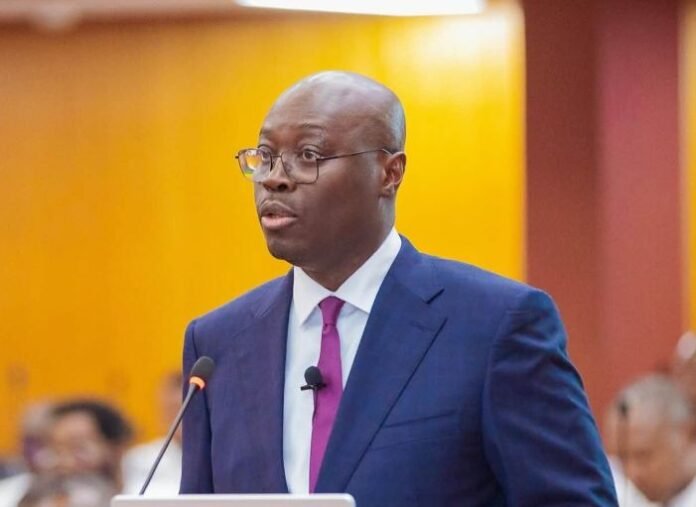

The government has allocated GH¢10 million to the Child and Human Trafficking Fund to strengthen interventions aimed at protecting children and other vulnerable individuals from human trafficking, while supporting victims and improving response mechanisms.
Finance Minister Dr Cassiel Ato Forson announced the funding during his presentation of the 2027 Budget Statement and Economic Policy to Parliament on Thursday, November 12, 2026.
The GH¢10 million allocation to the Child and Human Trafficking Fund is part of a broader GH¢3.4 billion investment in social protection programmes under the 2027 Budget.
Also read: Gov’t takes bold nuclear power step with $200m investment, targets 2028 deal
The Finance Minister disclosed that the GH¢3.4 billion allocation to the Ministry of Gender, Children and Social Protection would support vulnerable people and sustain programmes designed to improve their welfare across the country.
The funding covers several other major social intervention programmes, including the Livelihood Empowerment Against Poverty (LEAP) programme, the School Feeding Programme and dedicated funds for vulnerable groups.
Meanwhile, Ernest Kojo Manu, Communications Specialist and Communication Lead for the International Justice Mission (IJM) Ghana, has welcomed the GH¢10 million allocation to the Child and Human Trafficking Fund, describing it as the highest amount committed to the fund so far.
The allocation, he said, represents progress in efforts by advocacy organisations to secure increased government investment in the fight against human trafficking and the protection of vulnerable people. “That’s the highest allocation we’ve seen so far. Our advocacy has yielded some results,” he said.
However, Manu cautioned that the announcement must translate into actual funding for the intended interventions, expressing hope that the full amount would be disbursed during the 2027 fiscal year to support anti-trafficking activities.
He recalled that an earlier GH¢1 million allocation to the fund in 2026 was subsequently revised downwards during the mid-year budget review, raising concerns about the implementation of budgetary commitments.
“We are happy but cautiously optimistic,” he said, stressing the importance of ensuring that the GH¢10 million provision is protected and made available to support the fight against child and human trafficking in Ghana.
The International Justice Mission (IJM) is a global human rights organization that protects people in poverty from violence, modern-day slavery, human trafficking, and police abuse of power
GH¢1.1bn allocated to LEAP
A significant portion of the allocation, amounting to GH¢1.1 billion, has been earmarked for the Livelihood Empowerment Against Poverty programme.
The LEAP programme provides financial assistance to extremely poor and vulnerable households to help them meet basic needs and improve their living conditions.
The government says the funding will sustain the programme and provide relief to households facing extreme poverty.
School Feeding Programme gets GH¢2.1bn
The School Feeding Programme has received GH¢2.1 billion, making it the largest specific social intervention allocation announced by the Finance Minister.
Dr Forson said the provision was intended to ensure that hunger did not become a barrier to children’s education.
The programme supports schoolchildren in beneficiary institutions by providing meals to improve school participation and promote their welfare.
GH¢40m for Social Protection Fund
Government has also allocated GH¢40 million to the Social Protection Fund to strengthen assistance for disadvantaged individuals and vulnerable groups.
The fund is expected to complement existing interventions by providing additional resources to meet the needs of people who require social support.
Domestic Violence Fund receives GH¢10m
The Domestic Violence Fund has also been allocated GH¢10 million to support interventions targeting domestic violence and provide assistance to people affected by abuse.
The provision forms part of the government’s broader efforts to strengthen protection and response services for vulnerable individuals.