

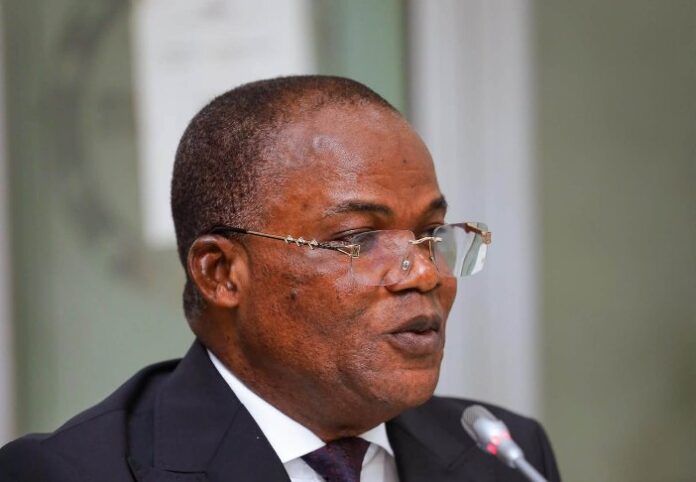

The Clerk to Parliament, Ebenezer Ahumah Djietror, has disclosed that the frequent public disagreements between Majority and Minority leadership do not necessarily reflect a breakdown in cooperation behind the scenes.
According to him, despite occasional heated exchanges and differences in political positions, leaders of the two parliamentary caucuses remain committed to working together to advance the business of Parliament.
Speaking at the leaders’ media briefing on Tuesday, November 3, 2026, ahead of the resumption of Parliament for the Third Meeting of the Second Session of the Ninth Parliament, Mr Djietror said disagreements between the two sides should be understood within the broader context of parliamentary democracy.
Also read: Majority leader pledges support for Minority’s cocaine probe Motion
He explained that differences in perspectives, sentiments and political positions are natural in a democratic institution, particularly when members are debating issues affecting the country.
“Perspectives and nuances may differ, views may differ, sentiments may differ, and sometimes, tensions will heighten. But all these are in the interest of good governance for the good people of Ghana,” he stated.
The Clerk stressed that disagreements in the Chamber do not mean parliamentary leaders abandon consultations or pursue their respective agendas without engaging one another.
“Never has it been that, after heated exchanges, leadership go their separate ways and do things without consulting each other,” he said.
Mr Djietror suggested that some of the confrontations witnessed in Parliament were partly intended to demonstrate the different positions and ideas held by the two sides, rather than evidence of a complete breakdown in their working relationship.
He explained that parliamentary leaders sometimes need to register their positions publicly to demonstrate their commitment to particular causes and policy directions.
He therefore urged journalists covering Parliament to understand these dynamics and ensure their reports communicate the appropriate message to the Ghanaian public.
The Clerk reaffirmed that the leadership of Parliament remains united in its commitment to the business of the House, which he describes as the business of the Ghanaian people.
Parliament is preparing for an intensive Third Meeting expected to involve major legislative business, financial considerations and discussions on national policy, particularly the 2027 National Budget and Economic Policy.
Mr Djietror also called on all stakeholders to place the national interest above partisan considerations and conduct themselves with decorum, discipline and a spirit of consensus.
The Third Meeting of the Second Session of the Ninth Parliament is expected to run for eight weeks, with the consideration of priority bills, statutory instruments and other important national matters forming part of the agenda.