

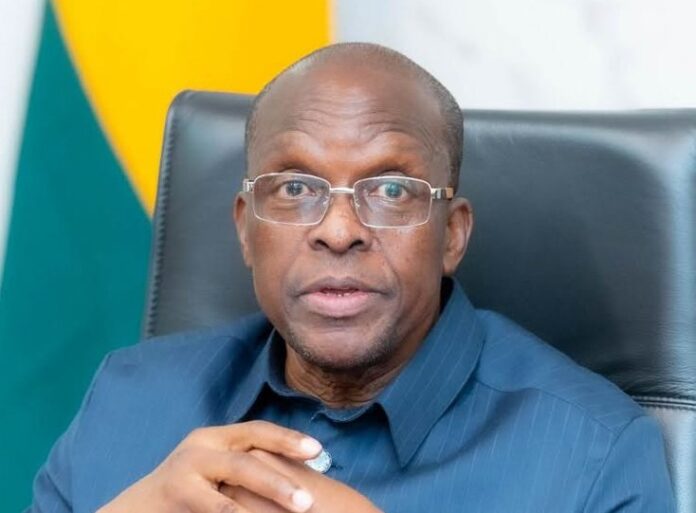

Speaker of Parliament Alban Sumana Kingsford Bagbin has questioned the extent of Africa’s economic independence, arguing that the continent cannot claim genuine sovereignty while relying heavily on foreign loans, financial assistance and external support to finance its development.
According to him, Africa’s continued dependence on external resources reflects deeper governance challenges, including corruption, greed and the failure of political leaders to mobilise and manage the continent’s considerable natural and economic resources effectively.
Addressing participants at the 6th African Organisation of Public Accounts Committees (AFROPAC) conference on Monday, November 2, 2026, the Speaker challenged African governments and parliamentarians to rethink their approach to economic development and financial independence.
Also read: Finance Minister to present 2027 Budget to Parliament on November 12
He questioned the contradiction between Africa’s enormous natural resource wealth and the economic difficulties confronting many of its citizens.
“We all keep on saying Africa is rich. But Africans are poor. Why?” he asked.
Bagbin argued that political independence would remain incomplete without the ability of African countries to generate sufficient domestic resources and finance their development priorities without excessive dependence on external assistance.
He expressed concern that several African Parliaments approve loan and credit agreements without adequately scrutinising their terms and the long-term implications for their countries.
According to him, discussions about debt forgiveness, debt swaps and reparations must also consider the broader question of why resource-rich African countries continue to depend on external financial support.
“Whether it’s political or economic, we haven’t gotten either of them. We need to work harder,” he said.
The Speaker maintained that genuine independence requires African countries to develop the capacity to depend on their own resources rather than continually relying on financial assistance from other nations.
He attributed the continent’s economic challenges partly to poor governance and greed, warning that the accumulation of extravagant personal wealth by public officials is undermining Africa’s development prospects.
Speaker Bagbin criticised individuals who build multiple expensive properties across different countries despite having limited personal needs, describing the practice as an indication of excessive greed.
He said the culture of celebrating public officials who leave office with substantial wealth while looking down on those who do not accumulate riches is encouraging the misuse of public resources.
The Speaker argued that corruption must attract appropriate sanctions if African countries are to change their governance culture.
He insisted that Public Accounts Committees have an important role to play in addressing these challenges by ensuring that public resources are properly managed and financial irregularities are not allowed to go unpunished.
The Speaker also urged African legislators to pay closer attention to the terms of international financial agreements, insisting that parliamentary approval must involve serious scrutiny rather than merely endorsing government proposals.
He linked economic independence to the need for stronger domestic production, particularly in agriculture and other productive sectors capable of reducing the continent’s dependence on imported goods.
He questioned why African countries should remain dependent on external support when they possess significant natural resources and productive capacity.
The Speaker called for greater cooperation among African countries, pointing to the importance of trade and investment in strengthening the continent’s economic position.
The work of Public Accounts Committees, he said, must therefore go beyond identifying financial irregularities to ensuring that available resources are used to improve living conditions, create opportunities and support sustainable development.
Bagbin urged participants at the AFROPAC conference to take their responsibilities seriously, describing effective parliamentary accountability as one of the instruments through which Africa could address governance failures and improve the economic independence of its citizens.