

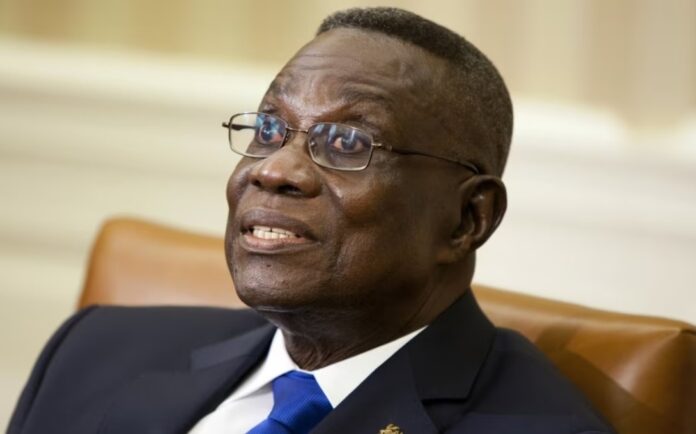

Ghana yesterday marked 14 years since the passing of former President Professor John Evans Fiifi Atta Mills, a statesman remembered for his humility, peaceful leadership and commitment to democratic governance.
Professor Mills, the third President of Ghana’s Fourth Republic, died on July 24, 2012, at the age of 68 while serving his first term in office. His death sent shockwaves across the country and attracted condolences and tributes from political leaders and institutions across Africa and the international community.
Also read: ‘This is not a place where we joke like clowns’ – Ayariga blasts Habib Iddrisu
Fourteen years on, the legacy of Atta Mills continues to occupy a significant place in Ghana’s political history, with many citizens remembering him as a leader who championed peace, national unity and political tolerance.
Atta Mills remembered for humility and peaceful leadership
Elected in December 2008 and sworn into office on January 7, 2009, Professor Mills led Ghana during a period of important economic and political developments.
His administration focused on social intervention programmes, education, infrastructure development and the responsible management of Ghana’s emerging petroleum resources following the start of commercial oil production in 2010.
One of the defining features of the Atta Mills presidency was his emphasis on national cohesion. His well-known declaration that he would govern “as a father for all” reflected his commitment to treating Ghanaians equally, regardless of their political affiliation or background.
The former academic and tax law expert was also widely admired for his modest lifestyle and calm temperament. Even some of his political opponents acknowledged his civility, restraint and dedication to constitutional democracy.
Atta Mills’ death and Ghana’s peaceful transition
The death of Professor Mills on July 24, 2012, marked one of the most emotional moments in Ghana’s Fourth Republic.
His passing also tested the country’s constitutional arrangements. However, Ghana successfully navigated the transition, with then Vice President John Dramani Mahama being sworn in as President on the same day.
The smooth transfer of power reinforced Ghana’s reputation as a stable constitutional democracy and demonstrated the strength of the country’s democratic institutions.
Professor Mills was later laid to rest on August 10, 2012, at Asomdwee Park in Accra. The site has since served as a place of remembrance for the late President and his contributions to Ghana’s political history.
Fourteen years on, Atta Mills’ legacy endures
As Ghana remembers the 14th anniversary of his passing, tributes continue to honour Professor Mills for his message of peace, tolerance and national unity.
He is fondly remembered by many as “Asomdwehene”, meaning the King of Peace, a title that reflects the peaceful and conciliatory approach associated with his leadership.
Although debates about his policies and political legacy remain part of Ghana’s national discourse, there is widespread recognition of the enduring impact he made on the country’s democratic journey.
The story of Atta Mills continues to remind Ghanaians that leadership is not measured only by political power or achievements in office, but also by character, humility and the values a leader leaves behind.
Fourteen years after his death, his call for peace, national cohesion and servant leadership remains relevant as Ghana continues to strengthen its democracy and build a more united nation.
For many Ghanaians, the legacy of Professor John Evans Fiifi Atta Mills remains a powerful reminder that public service can be guided by decency, integrity and a genuine commitment to the welfare of the people.