

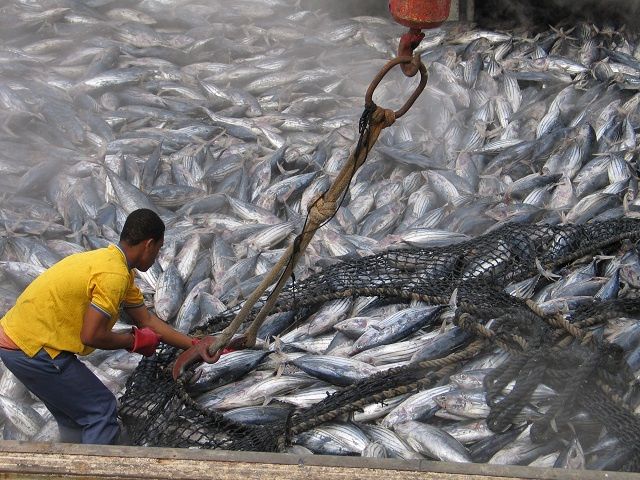

Ghana’s tuna industry is gradually collapsing under high operating costs, heavy taxes and inadequate government support, Vice Chairman of the National Fisheries Association of Ghana (NAFAG), Richster Amarh Amarfio, has warned.
According to Mr Amarfio, the sustained challenges facing operators have already resulted in the collapse of Ghana’s pole-line fishing sub-sector, with no pole-line vessel currently operating in the country.
“We are collapsing, and the factors that are collapsing us have eaten so much into our industry such that one sub-sector, which is the pole-line sector, is completely gone. We don’t have a single pole-line vessel in Ghana today,” he said in an interview with Citi Business News.
Also read: Gov’t suspends GH¢1 D-Levy on diesel for October, November
He identified fuel costs as one of the biggest challenges confronting tuna operators, explaining that fishing vessels receive no fuel support and must purchase fuel at prevailing market prices.
Mr Amarfio said a single vessel can consume about 270,000 litres of fuel, making fuel expenditure a significant component of operational costs.
Beyond fuel, he said fishing companies are also burdened with taxes on fish stocks, spare parts and equipment, despite the fisheries sector being classified under agriculture.
He further cited high port charges, dry-docking expenses and the cost of maritime security services required to enable vessels to operate safely in international waters.
“Basically, it looks like we’ve been left on our own. Nobody actually cares what is happening within our industry, and we are collapsing gradually,” Mr Amarfio said.
The NAFAG Vice Chairman is calling for deliberate government intervention to protect Ghana’s tuna industry and unlock its economic potential.
He said the sector generates more than US$200 million in foreign exchange annually, making its survival important to the Ghanaian economy.
Among his proposals is the establishment of a dedicated development authority for the fisheries sector to provide specialised support and coordinate interventions for the industry.
Mr Amarfio also called for increased investment in tuna research and value addition, arguing that Ghana can generate more economic benefits from tuna beyond the sale of fish.
He identified opportunities in products such as fish oil, fish meal and other value-added applications that could create additional revenue and employment.
Another major concern, according to Mr Amarfio, is the shortage of trained Ghanaian crew for fishing vessels.
He said the industry continues to rely heavily on ageing Korean workers because of limited availability of adequately trained and certified Ghanaian personnel.
He called for greater investment in the training and certification of Ghanaian captains, engineers and other fishing professionals.
Mr Amarfio noted that the Regional Maritime University currently lacks the infrastructure and training vessel required to adequately prepare personnel specifically for the fishing industry.
“We can train our crew and certify them,” he said, stressing the need for a deliberate national effort to develop local skills and rebuild Ghana’s tuna industry.
He said addressing the challenges confronting the sector would not only protect existing jobs and businesses but also help Ghana maximise the foreign exchange, employment and value-addition opportunities available within the fisheries industry.