

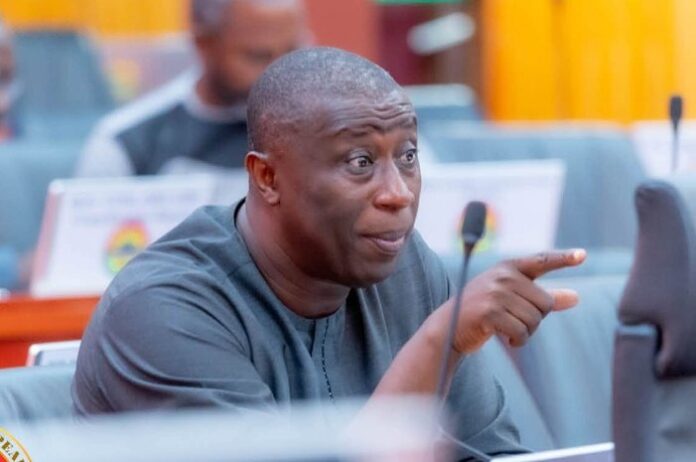

The Member of Parliament for Okaikwei Central, Patrick Yaw Boamah, has disclosed that the Ghana Revenue Authority (GRA) is facing a judgment debt exceeding GH¢680 million arising from a contractual dispute with technology company Safaritech.
Speaking in Parliament on Thursday, November 19, 2026, Mr Boamah blamed the liability on the government’s failure to honour contractual obligations and cautioned that similar disputes could expose the state to significant financial losses.
He disclosed this while contributing to discussions on proposed amendments to the State Proceedings Act, 1998 (Act 555), particularly provisions seeking to restrict the attachment of funds in the Contingency Fund and Consolidated Fund to settle judgment debts.
Also read: Patrick Boamah challenges Ato Forson over GH¢100m judgment debt allocation
The Okaikwei Central MP questioned the rationale behind the proposed restrictions, warning that they could undermine the ability of individuals and private companies to recover money owed to them by the state after obtaining court judgments.
According to him, preventing creditors from accessing certain government funds could make the enforcement of court judgments more difficult and potentially push judgment creditors to pursue other state assets to recover their money.
Mr Boamah argued that the government should prioritise preventing judgment debts rather than introducing legal restrictions that could complicate the recovery process.
He maintained that state institutions must honour contractual agreements entered into with private companies to avoid unnecessary litigation and the accumulation of financial liabilities against the taxpayer.
“As you speak, there are a lot of judgment debts that are hanging around the neck of government. As I speak to you, GRA is saddled with a judgment debt of over GH¢680 million from Safaritech,” he told Parliament.
“The government must respect the contracts that they enter into. State institutions must respect contracts to prevent the occurrence of judgment debt,” he added.
His remarks raise fresh concerns about the financial implications of contractual disputes involving public institutions and the potential burden of judgment debts on government finances.
The disclosure also adds to the debate over the proposed amendments to the State Proceedings Act and the balance between protecting public funds and ensuring that individuals and companies can enforce legitimate claims against the state.
Mr Boamah’s position is that the most effective way to address the growing burden of judgment debts is to ensure that government institutions fulfil their contractual responsibilities rather than make it harder for creditors to enforce court decisions.