

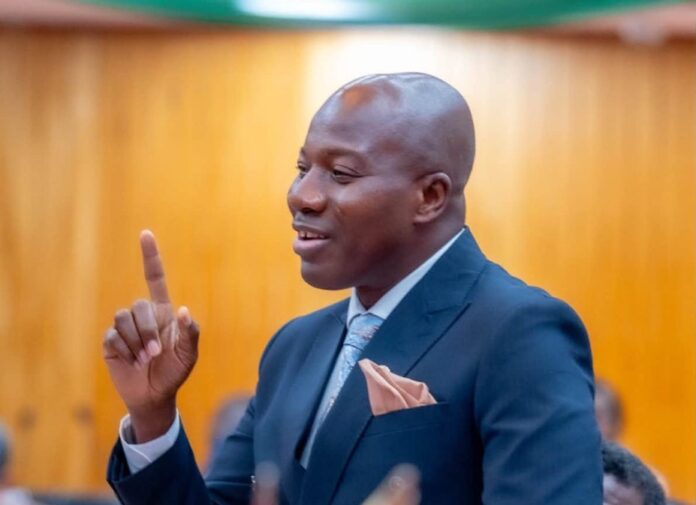

Minister for Local Government, Chieftaincy and Religious Affairs, Mahama Ayariga, has called for stronger collaboration between government and religious leaders to tackle sanitation challenges, restore public trust and preserve Ghana’s religious harmony.
Mr Ayariga made the call on Tuesday, September 8, 2026, when the Committee on Interfaith and Ecumenical Relations paid a courtesy visit to his office.
The minister said religious institutions have a critical role to play in helping the government influence positive behavioural change in communities, particularly in the fight against poor sanitation.
According to him, the government intends to collaborate with churches, mosques and other religious bodies to promote a change in mindset among citizens and encourage responsible management of the environment.
He said local government structures must develop systems that allow citizens to contribute effectively to keeping their communities clean.
“If we work closely with our religious leaders, churches, mosques, one key thing that is necessary for fixing the sanitation problem, which is mindset change, is an area that our various religious bodies are very good at,” Mr Ayariga said.
The Local Government Minister also identified the loss of public trust in government and other institutions as one of Ghana’s major challenges.
He said rebuilding confidence would require a collective effort involving government, religious institutions and other stakeholders.
Mr Ayariga noted that citizens are increasingly concerned about the effectiveness of public institutions and want practical solutions to problems affecting their daily lives.
“We need to work together to rebuild trust, both at the level of faith and also at the level of secular governance,” he said.
He stressed that restoring public confidence could help mobilise citizens behind important national development initiatives.
According to him, government must move beyond lengthy policies and statements and focus on delivering practical solutions to problems confronting communities.
Mr Ayariga praised Ghana’s religious communities for maintaining peaceful coexistence and said the country must protect that tradition for future generations.
He described the composition of the Committee on Interfaith and Ecumenical Relations as a reflection of Ghana’s tradition of different religious groups coming together to pray and work for the nation.
“I will work with you to maintain that harmony,” he assured the committee.
The minister said his office would remain open to advice and guidance from religious leaders as government seeks to strengthen collaboration with faith-based organisations.
He noted that churches and Muslim organisations already contribute significantly to national development through the provision of schools, hospitals and other social services.
Mr Ayariga therefore called for greater pooling of resources and closer cooperation between government and religious institutions to improve the welfare of citizens.
The minister also pledged his support for efforts to strengthen the National Prayers and Thanksgiving Day programme.
He said the ministry would support the committee’s fundraising efforts and help build on existing infrastructure to ensure the annual programme becomes increasingly successful.
Mr Ayariga suggested that the initiative could be expanded to the regional and district levels to deepen religious participation and demonstrate Ghana’s commitment to peaceful coexistence and national unity.