


The Minority in Parliament has renewed calls for a full parliamentary investigation into what it describes as a GH¢22 billion loss linked to Ghana’s Domestic Gold Purchase Programme (DGPP) in 2025.
According to the Caucus, the figure in the International Monetary Fund’s (IMF) Sixth and Final Review of Ghana’s Extended Credit Facility programme raises serious questions about the programme’s financial structure and management.
The IMF report puts the loss at approximately US$1.7 billion, equivalent to about GH¢22 billion, representing roughly 1.5% of Ghana’s Gross Domestic Product (GDP).
Also read: James Agalga thanks Ghanaians after appointment as Majority Leader
The Caucus stressed that the issue should not be reduced to whether the Ghana Gold Board (GoldBod) recorded an accounting loss in its own financial statements.
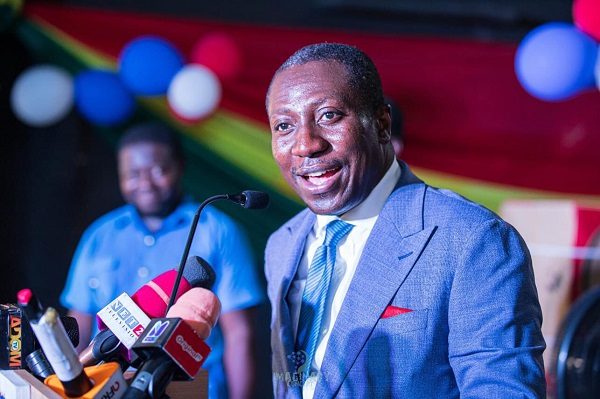
Addressing the media in Parliament on Tuesday, Minority leader Alexander Afenyo-Markin argued that there is a distinction between GoldBod’s corporate financial performance and losses incurred through transactions carried out under the Domestic Gold Purchase Programme on behalf of the Bank of Ghana (BoG).
It said GoldBod may maintain that the US$1.7 billion figure in the IMF report does not appear as a loss in its own financial statements because it operated as a buying agent for the central bank.
However, the Minority insisted that the economic cost to the state remains significant regardless of which public institution ultimately records the loss.
“An accounting structure cannot be used as a shield against public accountability,” the Caucus said.
According to the Minority, GoldBod participated in the buying, aggregation, assaying and export of gold, while the Bank of Ghana provided the financing and ultimately carried the major financial risk.
The Caucus therefore wants authorities to explain how prices were determined, whether premiums were paid to suppliers, how international off-takers were selected and what discounts were applied when gold was sold.
It also wants details of the fees GoldBod earned from transactions financed by the Bank of Ghana and the risk-management controls that were in place.
The Minority leader said concerns over the financial structure of the Domestic Gold Purchase Programme are not new.
He pointed to the IMF’s Fifth Review, which had identified a quasi-fiscal loss of about US$214 million through September 2025.
According to him, the IMF attributed the losses to factors including trading activities, fees and exchange-rate movements and called for improved transparency, governance and risk management.
He cited the IMF’s explanation that losses accrued on gold trades included service and assay fees paid to GoldBod, discounts on gold sold to off-takers and, significantly, exchange-rate losses arising from differences between the forex bureau rate used to purchase gold and the cedi reference rate used for Bank of Ghana accounting.
The Caucus argued that the latest figure in the IMF report therefore makes the issue more urgent and requires a comprehensive review of the programme.
Despite its criticism, the Minority stressed that it is not opposed to GoldBod or Ghana’s efforts to build gold reserves.
The Caucus said it supports the broader objective of accumulating reserves through gold purchases but insisted that such a policy must be commercially sound, transparent and properly managed.
It also claimed that the current government adopted an idea contained in the NPP’s 2024 manifesto, which proposed using a gold purchase programme to help stabilise the cedi and strengthen Ghana’s foreign-exchange reserves.
The Minority said its concern is therefore not with gold purchases themselves but with the cost, governance structure, financing arrangements and risks associated with the programme.
The Caucus announced that it would make another attempt to secure a parliamentary investigation when Parliament resumes.
It acknowledged that an earlier motion on the matter was defeated but argued that new developments, including the latest IMF report, the reported GH¢22 billion loss, the Bank of Ghana’s negative equity position and calls for an investigation, constitute new matters.
The Minority leader said the side would rely on Parliament’s Standing Orders to justify the fresh attempt.
“When this House resumes, the Minority will make a fresh effort to cause a full Parliamentary probe into these losses,” he declared.
He challenged GoldBod Chief Executive Officer Sammy Gyamfi to provide detailed records on the programme, including ledgers, lists of off-takers and aggregators, and audited accounts.
He maintained that the objective is to establish where responsibility for the financial risks and losses ultimately lies.