

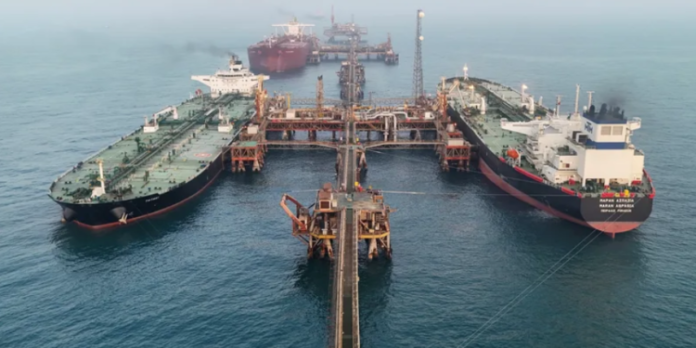

The Chief Executive Officer of the Chamber of Oil Marketing Companies (COMAC), Dr Riverson Oppong, has warned that ongoing disruptions to global oil supply routes could force Gulf producers to cut crude oil production by as much as 60%.
The warning comes amid disruptions to oil shipments through the Strait of Hormuz and drone attacks on Saudi oil infrastructure, which have tightened global crude supply and pushed oil prices upward.
Speaking on Channel One TV’s The Point of View on Monday, September 14, he noted that disruptions to the movement of crude oil are creating significant pressure on producers, particularly as they face challenges transporting and storing their output. According to him, producers could soon be forced to reduce production because they may have limited capacity to store crude oil amid the disruptions.
Also read: Japan Supreme Court rejects Ghanaian man’s welfare appeal
“Very soon, the Gulfians are going to reduce crude oil production by 60%. They have no choice because they’re going to produce; they’re not going to have any place to store it because of this shutdown,” he said.
Dr Oppong explained that the situation has been worsened by disruptions around the Strait of Hormuz, a key route for global crude oil and liquefied natural gas flows. He said the disruption is also affecting alternative supply routes, including infrastructure intended to transport oil outside the Strait of Hormuz.
“The refinery throughput today in the Middle East has shortened by 110. So it tells you that even diesel production within the Gulf itself has shrunk with the September data we are gathering now,” he said.
Dr Oppong further warned that disruptions affecting Russian diesel and petrol flows were adding to the pressure on global energy supplies.
“Never ever have we experienced such an outlook ever in history, where two major sources, the Caspian source and the Strait of Hormuz, or the Gulf source, have both been attacked,” he said.
He said the combined disruptions could have serious implications for countries that depend heavily on imported petroleum products, including Ghana and other African countries.
CNR