


The sharp increase in funds transferred to Metropolitan, Municipal and District Assemblies (MMDAs) is raising fresh questions about their capacity to manage public resources effectively, with nearly half of the assemblies still falling below minimum public financial management standards.
The concern comes as transfers from the District Assemblies Common Fund (DACF) to MMDAs rose from about GH¢390 million in 2024 to more than GH¢5 billion following recent reforms to the disbursement system.
Against this backdrop, the World Bank, in collaboration with the Ministry of Finance and other stakeholders, is undertaking a new assessment of public financial management at the local government level to establish whether existing systems can adequately account for the growing resources.
Also read: Agalga rules out declaring detained Asante Akyem North MP’s seat vacant
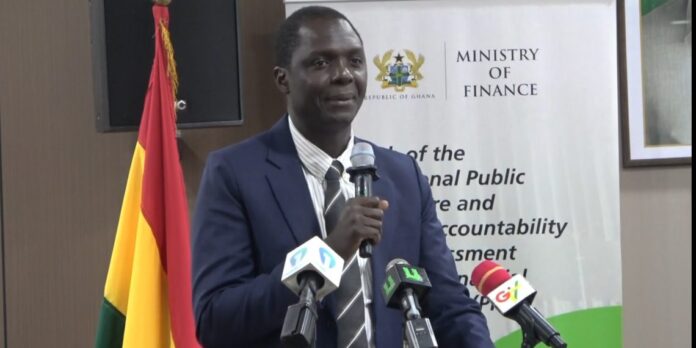
A representative of the World Bank, Raymond Muhula, speaking at the launch of a working group to oversee the exercise, said the increased funding must be matched by stronger accountability and service delivery systems.
“It’s a major shift in how public money is managed at the local level. So we need to find out what the systems are, what are the mechanisms that are safeguarding, hence the management of these resources,” the representative said.
The assessment will include 10 sub-national Public Expenditure and Financial Accountability (PEFA) assessments, alongside a broader public financial management report covering all 261 districts.
The initiative will also examine revenue mobilisation, expenditure management, procurement, payroll and the predictability of central government transfers.
Although compliance has improved, significant gaps remain. Data from the Centre for Local Governance Advocacy’s PFM league table show that the average compliance score for MMDAs increased from 22 per cent in 2023 to 56 per cent in 2025.
However, nearly half of the assemblies still fall short of the minimum benchmark, with procurement planning, financial reporting, internal audits and follow-up on audit findings identified as persistent weaknesses.
The World Bank representative said the exercise would provide evidence to guide reforms and ensure that increased public spending translates into better services for citizens.
“More resources are reaching MMDAs, and their systems are improving. We now need good evidence on where the systems hold up and where they do not,” the representative said.
The last sub-national PEFA assessment in Ghana was conducted in 2012, making the new exercise the first major update in more than a decade.
CNR