

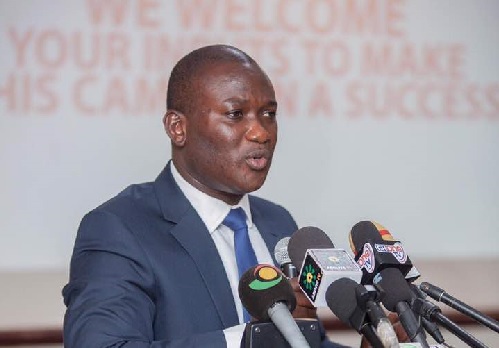

The Member of Parliament for Gushegu, Alhassan Tampuli, has said the constitutional authority of the Attorney-General over the Office of the Special Prosecutor (OSP) is clear and sufficiently grounded in law.
His comments follow a High Court ruling in Accra on April 15, 2026, directing the Attorney-General’s Department to immediately assume control of all criminal prosecutions being handled by the OSP, pending formal authorisation. The decision effectively strips the OSP of its prosecutorial role in ongoing cases, transferring that responsibility to the Attorney-General’s Department.
Defending the court’s decision on The Big Issue on Channel One TV on Saturday, April 18, the Gushegu MP argued that the legal framework governing the OSP leaves no ambiguity about the Attorney-General’s supervisory role.
Also read: Ghana’s non-traditional exports hit $5bn in 2025, up 30.7% – GEPA report
“This provision, in its intent and purposes, was sponsored by the AG, and the office is communicating to Ghanaians that you are to prosecute these cases under the authority of the AG. As far as I am concerned, this law is sufficient,” he said.
He cited provisions within the OSP Act, noting that its prosecutorial mandate is subject to Article 88 of the Constitution.
“The law proceeds to say under section four that, subject to Clause four of Article 88 of the constitution, states that the office shall, for this act, be authorised by the AG to initiate and conduct the prosecution of corruption and corruption-related offenses.
“When you go through all these, there is only one conclusion. The AG who sponsored this act brought it to Parliament and provided for an agency like the OSP to prosecute cases on its behalf. It is deemed to have acted on the provision. So this is explicit,” Tampuli explained.
The ruling has triggered debate over the independence of the OSP and the scope of the Attorney-General’s constitutional powers in overseeing corruption-related prosecutions.