

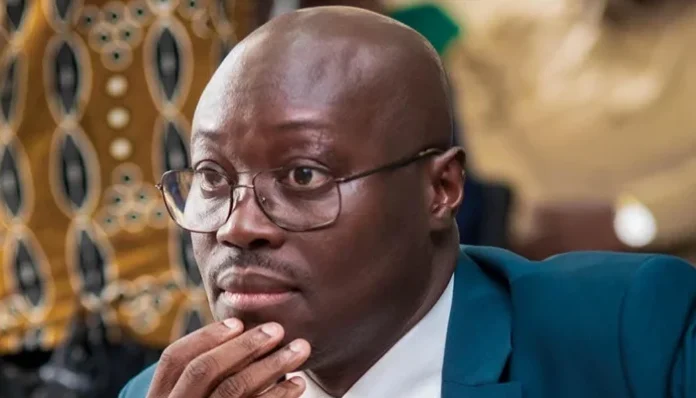

The Government has ruled out any compensation for bondholders who suffered losses under the Domestic Debt Exchange Programme (DDEP).
Finance Minister Dr Cassiel Ato Baah Forson stated that no legal or contractual obligation exists to reimburse affected investors.
Speaking at a joint press briefing in Accra on Friday to announce the successful completion of Ghana’s US$3 billion programme with the International Monetary Fund (IMF), Dr Forson acknowledged the painful impact of the debt restructuring but stressed that the country was under no obligation to give compensation to bondholders.
Also read: Mahama commends chiefs and people of Dagbon for prevailing peace
“The period was very traumatic for the Ghanaian people,” he said. “I do not recall that there is anything that calls on the people of Ghana for the government to provide compensation to those who, unfortunately, suffered losses on their investments.”
According to the Finance Minister, he is unaware of any clause in the agreements signed with bondholders during the 2022–2023 debt restructuring that would create a liability for the State.
“So we do not have any contingent liability on us based on what was agreed to,” he stated.
The Domestic Debt Exchange Programme was introduced as part of Ghana’s efforts to restore debt sustainability and secure support from the IMF after the country’s debt stock rose to approximately US$63 billion, representing about 88 per cent of Gross Domestic Product (GDP) by the end of 2022.
Under the programme, the government restructured about GH¢137 billion in domestic bonds, with more than 95 per cent participation from institutional and individual investors, including pension funds. The exercise involved extending maturities and reducing coupon rates, while the Bank of Ghana absorbed significant losses to help stabilise the financial sector.
The debt exchange contributed to a sharp improvement in Ghana’s macroeconomic outlook. Public debt declined to 56.6 per cent of GDP by the end of 2024, the country recorded a primary surplus of 1.7 per cent, international reserves rose to US$6.7 billion, and inflation fell to 3.4 per cent in April 2026 from a peak of 54.1 per cent.
Dr Forson said the government’s priority was now to maintain fiscal discipline and channel the gains from the IMF-supported reforms into economic growth and employment creation.
He announced that a flagship initiative dubbed the “New Economy Programme” would soon be launched to target sectors with high job creation potential. The programme is expected to receive technical assistance from the IMF over three years.
Ruben Atoyan, the IMF Mission Chief for Ghana, said the debt restructuring was essential to stabilise the economy and create fiscal space for sustainable growth.
He noted that the focus going forward would be on maintaining prudent fiscal policies, building buffers from gold-related revenues, and managing risks associated with state-owned enterprises and quasi-fiscal activities.
The IMF official added that the new Policy Coordination Instrument, which will replace the Extended Credit Facility, will place greater emphasis on safeguarding the economy against contingent liabilities and fiscal risks.