


The opposition New Patriotic Party (NPP) has challenged the government’s portrayal of Ghana’s latest agreement with the International Monetary Fund (IMF), insisting that the country has not exited IMF supervision and remains under close policy monitoring for the next three years.
According to the NPP, while the IMF acknowledged substantial gains in macroeconomic stabilisation, the Fund’s decision to place Ghana under a 36-month Policy Coordination Instrument (PCI) demonstrates that the country still requires structured policy oversight to safeguard the progress made under the bailout programme.
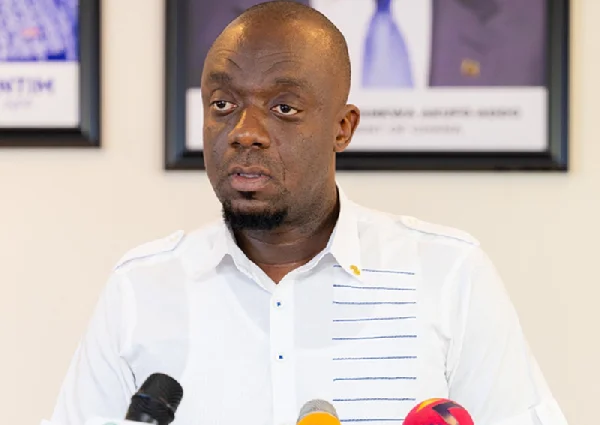
A statement issued by the party’s General Secretary, Justin Frimpong Kodua, welcomed the IMF’s positive assessment in its sixth and final review of Ghana’s Extended Credit Facility (ECF) programme, but accused the National Democratic Congress (NDC) government of exaggerating the significance of the development.
Also read: Mahama resurrecting criminal libel to suppress dissent – Minority leader
Mr. Kodua argued that the government’s suggestion that Ghana had effectively graduated from IMF assistance was misleading.
“The Finance Minister’s description of today’s announcement as the definitive end of Ghana’s relationship with the IMF overreaches what the IMF has actually said,” he stated.
He noted that the PCI is specifically designed for countries that have achieved initial stability but still need policy discipline, regular monitoring, and performance benchmarks.
“What it truly means is that the IMF does not trust the NDC administration to maintain stability without supervision,” the statement said.
The NPP maintained that the improvements recognised by the IMF stem from policy measures initiated by the former government in 2023, including the Domestic Debt Exchange Programme (DDEP) and external debt restructuring under the G20 Common Framework.
These interventions, he said, reduced Ghana’s debt-to-GDP ratio from 72.5 percent in December 2023 to 61.8 percent in December 2024, and further to 45.3 percent by the end of 2025.
He described the stabilisation gains as the result of the most politically costly decisions taken by any administration in the Fourth Republic and commended Ghanaians for enduring the economic hardships associated with the reforms.
The NPP also disputed claims by the government that the IMF programme had been derailed at the end of 2024.
Mr. Kodua argued that IMF documents from 2025 referred only to policy slippages and not a derailment, noting that all six Quantitative Performance Criteria were ultimately met.
He contrasted this with the 2015 IMF programme under the previous NDC administration, which he said was formally extended and rephased after going off track.
The NPP General Secretary lamented several vulnerabilities identified by the IMF, including financial pressures facing the Electricity Company of Ghana (ECG) and the Ghana Cocoa Board (COCOBOD), quasi-fiscal activities operating outside the formal budget framework, and balance-sheet risks at the Bank of Ghana.
He further pointed to elevated non-performing loans within the banking sector, governance and anti-corruption shortcomings, and an overreliance on high gold and cocoa prices as key factors sustaining the country’s external position.
He questioned why the IMF would outline such significant risks if the economy had truly reached a stage of transformation.
“Stabilisation is not transformation,” he stressed.
Mr. Kodua renewed the NPP’s demand for a clear and time-bound plan to recapitalise the Bank of Ghana, which he said is operating with a negative net equity of GH¢96.1 billion.
He also raised concerns about the Domestic Gold Purchase Programme, warning that quasi-fiscal costs associated with the initiative should be fully disclosed and incorporated into the national budget.
According to him, beyond macroeconomic indicators, many Ghanaians continue to struggle with unemployment, inflation, and high utility costs, citing youth unemployment of 32.4 percent nationwide and 49 percent in Accra, arguing that the government must focus on the everyday realities confronting citizens rather than celebrating headline economic data.
The NPP, he said, will support reforms that strengthen institutions and improve living standards, but warned that the party will continue to hold the government accountable for the prudent use of public resources.