

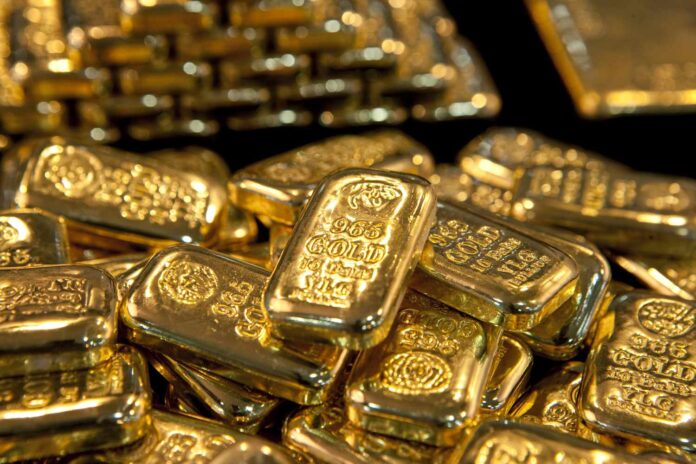

The Damang Gold Mine has delivered its second full gold output to the Ghana Gold Board, reinforcing the mine’s commitment to sell its production to the state as part of efforts to support Ghana’s gold reserve accumulation and value retention strategy.
The latest consignment, presented on Monday, May 18, 2026, amounted to 121 kilogrammes of gold, equivalent to about 3,400 ounces. This exceeds the mine’s previous delivery of about 103 kilogrammes made during its first transaction with GoldBod.
GoldBod officials described the transaction as another important step in Ghana’s attempt to ensure that more of the country’s gold output supports the domestic economy, rather than being exported entirely through private channels.
Also read: Ghana to exit GAVI vaccine support by 2030 – Mahama
Speaking during the presentation ceremony, Michael Arko, Technical Director of GoldBod, commended the management of Damang Gold Mine and its parent company, Engineers and Planners, for supporting the government’s national gold policy.
“Today marks a very significant and refreshing moment for us at Ghana GoldBod,” Mr Arko said. “This is the second time Damang Gold Mine is delivering 100 percent of its gold production to the Ghana GoldBod, and we highly commend the management for supporting the national policy.”
He explained that government policy encourages large-scale mining companies to supply between 20% and 30% of their gold production to the state to help Ghana retain more value from its mineral resources and strengthen the economy.
“If all the other mining companies follow this good example, it will do well for our economy,” Mr Arko added.
The latest delivery follows Damang Mine’s earlier sale of its first full gold output to GoldBod. During that first transaction, GoldBod Chief Executive Officer Sammy Gyamfi described the move as a bold and patriotic step that should encourage a wider national conversation on how large-scale mining companies can support Ghana’s reserve-building agenda.
“This bold and patriotic step by Damang Gold Mine must challenge us as a nation to begin a serious conversation about the need for large-scale mining companies to contribute meaningfully to Ghana’s gold reserve accumulation,” Mr Gyamfi said at the time.
He said having Ghanaians at the helm of the minerals and mining sector was critical to maximising national benefits, promoting local value retention and driving economic transformation.
The Damang transaction is significant because Ghana has in recent years been trying to increase the amount of gold retained within the domestic financial system to support foreign exchange stability and strengthen the Bank of Ghana’s reserves.
GoldBod has been positioned as a key institution in that strategy, with responsibility for gold trading, assaying, refining, export and value retention. Its broader mandate is to help Ghana capture more value from gold production while improving transparency and traceability in the sector.
For Damang Gold Mine, the second full delivery is also a signal that its earlier sale to GoldBod was not a one-off event.
Lawyer for Damang Gold Mine, Bobby Banson, who represented the company at the handover, said the latest transaction demonstrates the mine’s sustained commitment to Ghana’s economy.
“For those who thought what we did last time was a nine-day wonder, this is further evidence of the commitment of the mine, wholly owned by a Ghanaian, to support the Ghanaian economy,” Mr Banson said.
He said the decision to supply the full output to GoldBod reflects the mine’s willingness to place national economic interest alongside commercial operations.
Mr Banson also reaffirmed the company’s commitment to continue giving GoldBod the right of first refusal for future gold production, subject to the Board’s financial capacity to purchase the gold.
“As long as GoldBod has the financial capacity to take it, we will continue to give them the right of first refusal because we want to contribute in our own small way to bringing stability to our economic fortunes,” he stated.
The development comes at a time when Ghana’s mining sector is under intense public scrutiny over resource nationalism, local ownership, lease renewals and whether the country is receiving enough value from its mineral wealth.
The Damang delivery is, therefore, likely to be cited by the government as evidence that Ghanaian-led mining operations can support national reserve accumulation while still operating within the formal mining and gold trading system.
For GoldBod, the immediate message is simple: more large-scale miners should make part of their gold output available to the state. For Damang Mine, the second delivery strengthens its public positioning as a Ghanaian-owned mining operation seeking to align production with national economic priorities.
The deeper test, however, will be whether other mining companies follow the same path and whether GoldBod has the financial capacity to consistently purchase more gold from large-scale producers without disrupting their commercial operations.
NorvanReport