

Ghana’s mobile money sector has recorded another year of robust growth, with transaction value reaching GH¢493.2 billion in April 2026, underscoring the pivotal role digital finance now plays in everyday economic life across the country.
Figures from the Bank of Ghana’s May 2026 Summary of Economic and Financial Data show that mobile money transaction value jumped from GH¢365.0 billion in April 2025, representing a year-on-year increase of approximately 35.1 per cent.
The volume of transactions equally surged, rising from 778 million to 967 million over the same period – a clear sign that Ghanaians are not only moving more money digitally but doing so more frequently.
Also read: GH¢20m lawsuit: Family sues 3 major hospitals over Charles Amissah death
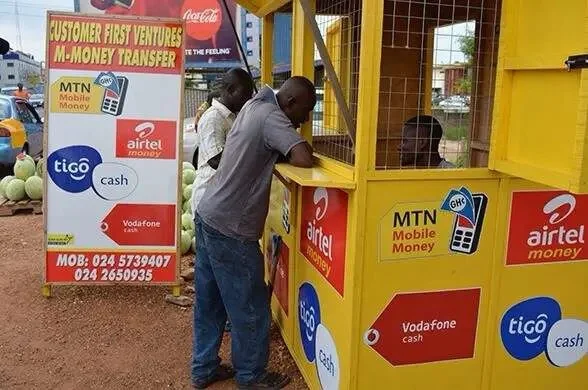
The data paint a picture of mobile money that has long outgrown its origins as a simple peer-to-peer transfer service. It now functions as a central pillar of Ghana’s financial infrastructure, facilitating merchant payments, utility bills, informal trade, savings, and small business transactions at a scale few could have anticipated a decade ago.
“Mobile money has become the heartbeat of Ghana’s digital economy,” a financial analyst commented on the figures.
Registered mobile money accounts rose from 75.2 million in April 2025 to 83.0 million in April 2026, while active accounts – those that recorded at least one transaction within the preceding 90 days – grew from 24.2 million to 26.0 million.
This steady increase in active usage suggests deeper and more habitual engagement with the platform, rather than passive account ownership.
The physical infrastructure has also been strengthened. Registered agents grew from 911,000 to 992,000, while active agents increased more sharply, from 414,000 to 534,000.
The expansion of the active agent base is particularly significant for underserved communities where bank branches remain scarce, bringing digital financial services within easier reach of more Ghanaians.
One notable shift in consumer behaviour is the growing tendency to hold funds in mobile wallets rather than simply using them as conduits for transfers.
The balance on float – funds held in mobile money wallets at any given time – rose from GH¢28.2 billion in April 2025 to GH¢36.7 billion in April 2026, suggesting that mobile wallets are increasingly being treated as short-term savings instruments.
Cross-network mobile money transfers also continued to grow, with interoperability transaction value rising from GH¢4.0 billion to GH¢5.8 billion, and the number of interoperability transactions climbing from 23.1 million to 31.7 million.
The figures point to a more seamlessly connected digital payments ecosystem, where subscribers are no longer restricted by network boundaries.
The dominance of mobile money becomes even more striking when set against other payment channels:
- Cheque transactions: GH¢36.6 billion (less than eight per cent of mobile money)
- GhIPSS Instant Pay: GH¢79.0 billion
- Internet banking: GH¢42.0 billion
- Mobile money: GH¢493.2 billion
By both value and volume, mobile money remains Ghana’s leading payment channel by a considerable margin.
The April 2026 numbers affirm what has become increasingly evident: mobile money is no longer an alternative to formal finance in Ghana. For millions of people, it is the primary means through which they participate in the economy.