

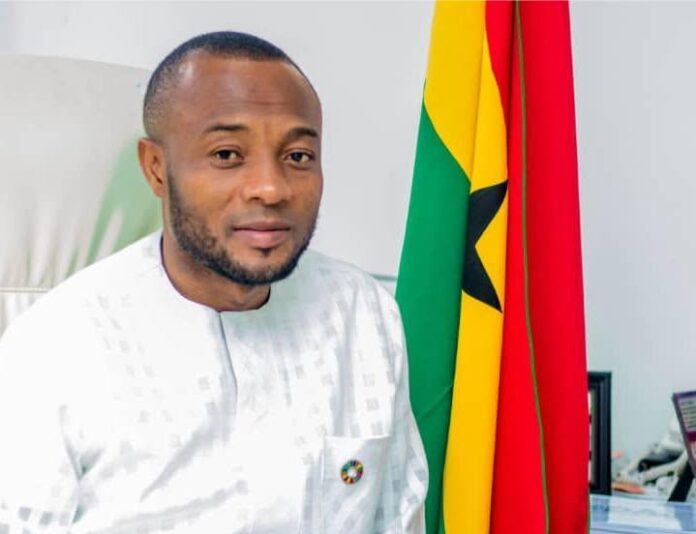

The Member of Parliament for Weija-Gbawe, Jerry Ahmed Shaib, has called for a decisive national shift in Ghana’s flood management strategy, arguing that the country can no longer rely on emergency responses and post-disaster relief efforts to address recurring floods.
Ghana, he said, must embrace a long-term flood resilience agenda that prioritises prevention, climate-smart urban development, and stronger enforcement of planning regulations.
Delivering a statement on the subject, the Second Deputy Minority Whip argued that the annual pattern of floods followed by relief interventions has become unsustainable, particularly in vulnerable communities across Greater Accra.
“Every year, we witness the same cycle. Heavy rains lead to flooding, families lose their homes and livelihoods, emergency relief is provided, drains are desilted, and then we wait for the next disaster. This approach is no longer sufficient,” he stated.
Mr. Shaib said communities in the Weija-Gbawe Constituency, including Tetegu, Oblogo, Weija, Glefe, White Cross, SCC, Kokroko, and Gonse, continue to bear the brunt of flooding due to poor drainage systems, uncontrolled development, and environmental degradation.
He stressed that the growing frequency of floods is not solely a result of climate change but also a consequence of human activities that obstruct natural waterways and reduce the land’s ability to absorb rainfall.
The legislator called on the government to prioritise immediate interventions in flood-prone communities while pursuing structural reforms aimed at preventing future disasters.
Among the measures he proposed were extensive desilting of drains, restoration of wetlands, protection of floodplains, enforcement against illegal construction on waterways, and the introduction of mandatory water-impact assessments for major developments.
Mr. Shaib also urged the Minister responsible for Works, Housing and Water Resources to appear before Parliament with a comprehensive strategy outlining the government’s short, medium, and long-term plans to address flooding.
He further called for updates on the work of the national Flood Task Force established by President John Dramani Mahama, saying its findings should be made available to Parliament and the public.
According to the MP, Ghana’s urban development policies must evolve to reflect the realities of climate change and rapid urbanisation.
He advocated the adoption of modern flood management practices, including rainwater harvesting systems, permeable surfaces, green corridors, and nature-based infrastructure that can absorb and manage excess stormwater.
The Weija-Gbawe lawmaker also emphasised the need for stronger community participation in flood prevention efforts, particularly in waste management and the protection of drainage channels.
He lamented that indiscriminate dumping of refuse remains one of the major contributors to flooding in many urban communities.
Calling for a coordinated national response, Mr. Shaib proposed the development of a Greater Accra Flood Resilience Plan that would bring together engineers, environmental experts, urban planners, local authorities, and traditional leaders to address the problem comprehensively.
He maintained that investing in prevention would save the country billions of cedis spent on relief and reconstruction after every major flood event.
“The lives lost during floods can never be replaced. We must move from reacting to disasters to preventing them. Ghana deserves safer, cleaner, and more resilient communities,” he said.
Mr. Shaib urged Parliament to champion lasting reforms that will transform Ghana’s approach to flood management and protect future generations from recurring flood disasters.