

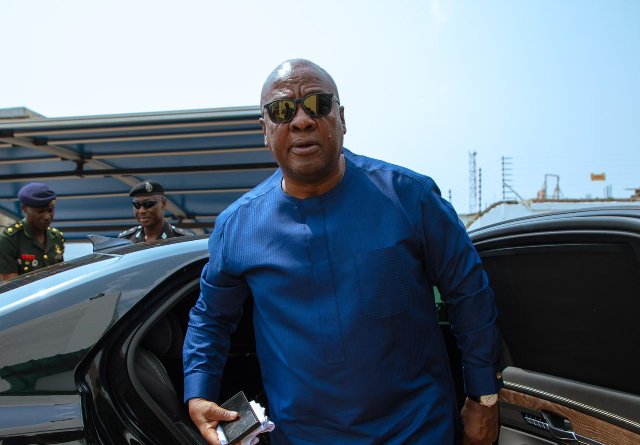

The Chief Executive Officer of polling firm Global InfoAnalytics, Mussa K. Dankwah, says President John Dramani Mahama continues to enjoy strong public support despite economic challenges confronting many Ghanaians.
He disclosed that Global InfoAnalytics’ latest survey shows President Mahama’s job approval rating has increased from 67 per cent in March 2026 to 71 per cent in June 2026, representing a four-percentage-point rise in just three months.
The nationwide survey was conducted between May 30 and June 12, 2026, using a combination of face-to-face interviews and web-based questionnaires.
Also read: The real health benefits of using resistance bands
According to the poll, 66 per cent of respondents believe Ghana is moving in the right direction, up slightly from 65 per cent recorded in March. Meanwhile, those who believe the country is heading in the wrong direction declined marginally from 28 per cent to 27 per cent.
Speaking on TV3’s Key Points programme on Saturday, Mr. Dankwah explained that although many Ghanaians continue to face personal and economic difficulties, they still approve of the President’s overall performance.
“People are very rational. Some may be unhappy with certain aspects of their lives, yet they would approve of the President. Some are happy, yet they disapprove of the President,” he said.
He noted that findings from the survey indicate that 54 per cent of respondents believe their standard of living has improved compared to a year ago, which may partly explain the sustained support for the President.
The Global InfoAnalytics CEO observed that respondents who cited issues such as the economy, the value of the cedi, and the cost of living were, in many cases, among those approving of President Mahama’s performance.
“In this country, three things determine national outcomes – the economy, the cedi, and the cost of living,” he stated.
Addressing differences between his firm’s findings and a recent survey by the Institute of Economic Affairs (IEA), which reported a decline in the President’s approval ratings, Mr. Dankwah cautioned against directly comparing polls without considering methodological differences.
He stressed that factors such as the period during which surveys are conducted, events occurring at the time, sample distribution, and margin of error significantly influence outcomes.
According to him, Global InfoAnalytics interviewed about 7,800 respondents, including approximately 7,484 face-to-face interviews, resulting in a relatively low margin of error of 1.5 per cent.
“The smaller the sample size, the bigger the margin of error,” he explained, adding that polling methodologies must evolve to reflect changing societal realities, including increased internet and social media use.
Mr. Dankwah maintained that combining web-based and in-person surveys allows researchers to capture the views of a broader and more representative cross-section of Ghana’s voting population.