

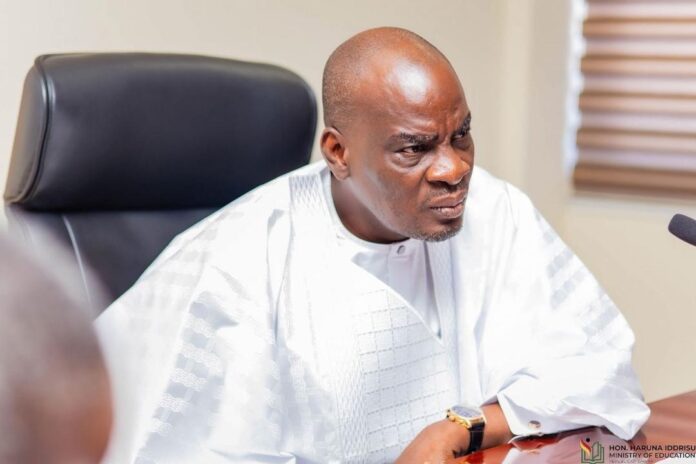

The Minister for Education, Haruna Iddrisu, has announced that the government will introduce a 20% rural posting allowance for teachers serving in rural and deprived communities as part of broader measures to improve teacher welfare, motivation and retention.
He disclosed this in Parliament on Thursday, while responding to a question from the Member of Parliament for Afigya Kwabre, Damata Ama Appianimaa Salam, on the government’s strategies to improve the welfare of teachers, particularly those posted to rural areas.
Responding to the question, the Minister for Education assured that teacher welfare remains a national priority as government seeks to strengthen motivation, dignity and long-term educational outcomes across the country.
Also read: Minority Whip calls for stronger carbon market regulations to protect Ghana’s future
The government, he said, is committed to rolling out a 20 per cent Rural Posting Allowance for teachers serving in rural and deprived communities.
According to him, the allowance is intended to attract more teachers to hard-to-reach areas, improve staff retention and compensate educators for the challenging conditions under which they work.
He disclosed that the Ministry of Finance, the Ghana Education Service (GES) and the Ministry of Education are currently working together to operationalise the incentive.
Hon. Haruna Iddrisu also highlighted existing incentives for teachers who accept postings to deprived communities. Under the current policy, teachers serving in designated deprived areas become eligible for Study Leave with Pay after two years of service, compared to the standard three years required for teachers in non-deprived areas.
The incentive, he said, is designed to encourage qualified teachers to accept and remain in postings where they are most needed.
To address accommodation challenges, Mr. Iddrisu said, the Ministry is pursuing the Teacher Dabre Initiative, which focuses on providing decent housing for teachers in rural communities.
Under the programme, the construction of new school infrastructure will increasingly be accompanied by teacher accommodation, particularly in areas where housing shortages make it difficult to deploy and retain teachers.
The Minister explained that improving access to quality accommodation would enhance teacher welfare and contribute to better learning outcomes for pupils.
According to him, the combined interventions are expected to improve teacher motivation, strengthen retention in underserved communities, and ensure equitable access to quality education across Ghana.
He assured that the government remains committed to implementing policies that support teachers while improving teaching and learning outcomes nationwide.