

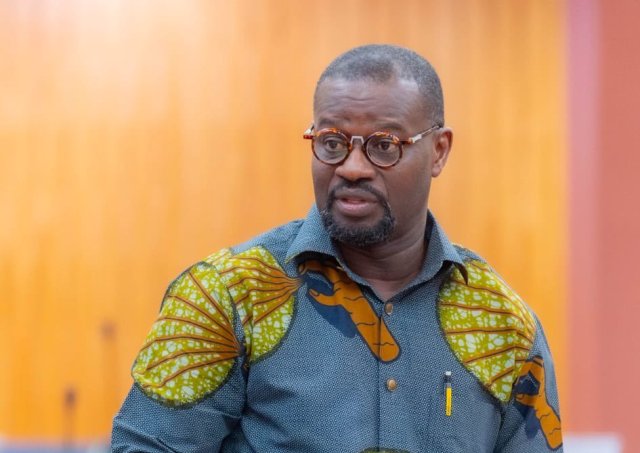

The Minority Chief Whip and Member of Parliament for Nsawam-Adoagyiri, Frank Annoh-Dompreh, has called on Parliament to enact legislation that criminalises ecocide, warning that the mass destruction of ecosystems poses a serious threat to Ghana’s future.
The lawmaker stressed environmental devastation, including deforestation, industrial pollution and illegal mining, must attract criminal liability rather than just regulatory sanctions.
According to him, ecocide refers to unlawful or reckless acts committed with the knowledge that they are likely to cause severe, widespread or long-term environmental damage.
Delivering a statement on the floor of Parliament on Monday, Hon Annoh-Dompreh explained that the concept has gained global attention as countries seek stronger legal frameworks to hold individuals, corporations and state actors accountable for large-scale environmental destruction.
Also read: G7 nations to hold emergency meeting on oil as stock markets sink
“This is not abstract rhetoric; it is a legal concept with measurable criteria, damage that is severe, widespread, or long-term,” he said.
“It goes far beyond regulatory fines or administrative sanctions, it is about criminal accountability for decisions and actions that destroy the very foundation of life and livelihood.”
The MP noted that while international law recognises genocide, crimes against humanity, war crimes and aggression under the International Criminal Court framework, ecocide has not yet been recognised as a standalone crime.
He argued that this gap creates what he described as a “legal vacuum” where severe ecological destruction can occur with limited criminal consequences.
Mr. Annoh-Dompreh cited environmental disasters such as the oil pollution in Nigeria’s Niger Delta as examples of ecological destruction that could qualify as ecocide.
He disclosed that several countries have already incorporated ecocide into their domestic laws, while others are currently considering similar legislation. These include Armenia, Belarus, Kazakhstan, Russia, Ukraine, Moldova, Georgia, Ecuador, Chile, France and Belgium.
According to him, Belgium recently became the first European Union country to criminalise ecocide as part of reforms to its penal code.
“Recognising ecocide as a crime embeds a moral framework into our legal system. Criminalisation signals that destroying ecosystems is morally and legally unacceptable,” he stated.
Mr. Annoh-Dompreh warned that Ghana’s ecosystems are already under severe pressure due to deforestation and illegal mining activities commonly referred to as galamsey.
He cited reports suggesting that up to 60 percent of Ghana’s water bodies have been polluted by illegal mining operations.
“Environmental stability is foundational to food security, human health and sustained economic development. The consequences of ecological damage are intergenerational,” he said.
The Minority Chief Whip recommended the introduction of a standalone ecocide law in Ghana with clearly defined thresholds for environmental damage.
He also urged Ghana to champion the recognition of ecocide as the fifth international crime under the Rome Statute of the International Criminal Court.
He proposed strengthening investigative powers of environmental institutions, enhancing prosecutorial capacity and introducing strict penalties, including custodial sentences and mandatory environmental restoration.
The Chief Whip’s calls gained support of the House as members who contributed to the statement advocated stronger legal protections for the environment.
The Member of Parliament for Agotime-Ziope, Charles Akwesi Agbeve, commended Annoh-Dompreh for his consistency and dedication to environmental advocacy in Parliament. According to him, the issue of ecocide deserves urgent legislative attention in Ghana.
Mr. Agbeve noted that only about eleven countries around the world have enacted domestic laws criminalising ecocide, with the Democratic Republic of the Congo currently the only African country to have taken such a step. He said this shows that many countries are still not treating environmental destruction with the seriousness it deserves.
He argued that although Ghana already has environmental protection laws, introducing a specific law criminalising ecocide would significantly strengthen enforcement and serve as a deterrent to activities such as sand winning, plastic pollution and the contamination of water bodies.
The Member of Parliament for Walewale, Tiah Abdul-Kabiru Mahama, also supported the proposal, describing ecocide as a major issue that requires immediate attention.
He stressed that just as the deliberate destruction of human life constitutes a crime under international law, the deliberate destruction of plant and animal life should also be treated with similar seriousness.
Dr. Mahama warned that environmental destruction contributes significantly to climate change and its effects, including flooding, new diseases and disruptions to ecosystems.
He urged Parliament to prioritise environmental protection and consider legislation that criminalises deliberate or negligent destruction of plants and animals, while supporting efforts to recognise ecocide as a crime under international law.