

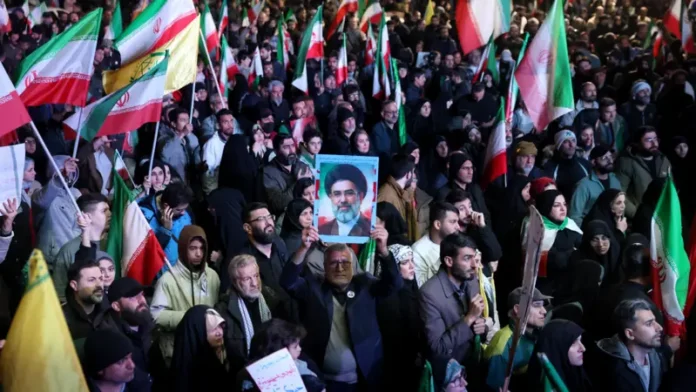

Former US President Donald Trump has announced a two-week ceasefire agreement between the United States and Iran, contingent on the continued flow of shipping through the strategically vital Strait of Hormuz.
Iran’s Foreign Minister Abbas Araghchi confirmed that Tehran is prepared to halt hostilities, but only if attacks against Iran are stopped. He indicated that the proposed 10-point ceasefire framework includes provisions such as compensation, though full details have not been publicly disclosed.
Meanwhile, Israel has clarified that the ceasefire arrangement does not extend to Lebanon, contradicting earlier remarks by Shehbaz Sharif suggesting a broader regional truce. Israeli authorities have since issued a fresh evacuation order for residents in Tyre, signalling that tensions along that front remain high.
Also read: BoG tightens liquidity with GH¢13.3bn mop-up
The ceasefire announcement came just over an hour before Trump’s stated 20:00 EDT deadline for Iran to agree to a deal or face severe consequences, including a warning that “a whole civilisation will die.”
Pakistan, which has played a mediating role, has invited both parties to peace talks in Islamabad on Friday. At the same time, UK Prime Minister Keir Starmer is travelling to the Gulf to rally international support for the ceasefire.
Despite Tehran portraying the agreement as a major victory, analysts suggest Iran remains in a weakened strategic position following recent developments.
In global markets, oil prices have dropped sharply in response to the easing tensions, although energy costs are expected to remain elevated in the near term due to lingering uncertainty in the region.
BBC