

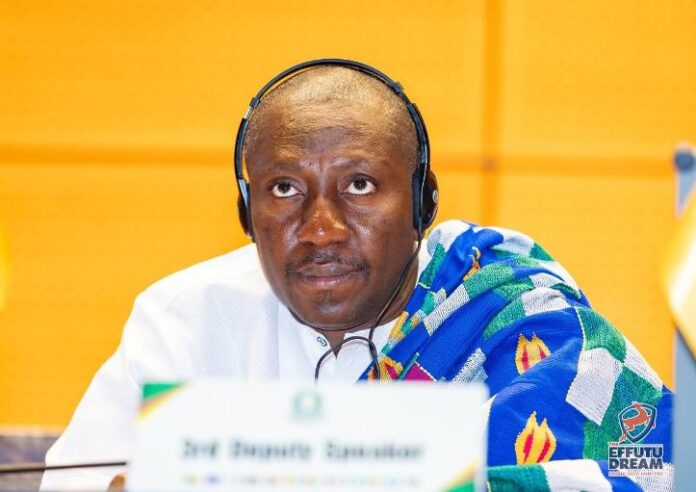

The Third Deputy Speaker of the ECOWAS Parliament, Alexander Kwamena Afenyo-Markin, has issued an urgent call for decisive regional action following the killing of West African citizens in Burkina Faso and a fresh wave of xenophobic violence in South Africa.
Addressing the First Ordinary Session of the ECOWAS Parliament in Abuja, the Third Deputy Speaker invoked Rule 71 to raise what he described as “grave and urgent concerns” threatening the safety and dignity of citizens across the sub-region.
His intervention follows a deadly February 14, 2026, attack in northern Burkina Faso, where suspected Al-Qaeda-linked militants ambushed a truck carrying 18 Ghanaian tomato traders. According to Afenyo-Markin, the attackers separated the men from the women, executed them, and set the vehicle ablaze with the driver trapped inside.
Also read: The Front pages: Wednesday, 6th May, 2026 (Newspapers)
“These were not just numbers,” he told the chamber. “They were fathers, sons, and breadwinners—ordinary people sustaining regional trade.”
He warned that deteriorating security in the Sahel is crippling cross-border commerce. A recent coordinated assault in Mali, which reportedly claimed the life of the country’s Defence Minister, has disrupted the Ghana–Mali trade corridor, with Ghana’s Foreign Ministry now unable to guarantee the safety of nationals along those routes.
Turning to South Africa, Afenyo-Markin condemned renewed xenophobic attacks targeting African migrants in cities including Durban, Cape Town, and Pretoria. Victims, he noted, include Ghanaians, Nigerians, Zimbabweans, and Ethiopians, many of whom have been killed, displaced, or had their businesses looted.
While acknowledging remarks by Cyril Ramaphosa condemning xenophobia, he stressed that rhetoric alone is insufficient.
“Statements from ceremonial platforms do not stop violence or bring perpetrators to justice,” he said, urging South African authorities to investigate and prosecute all documented cases without delay.
The Effutu MP also criticised ECOWAS itself, pointing to systemic failures in enforcing its own free movement protocol nearly five decades after its adoption. He highlighted ongoing harassment of citizens at borders and contradictions between national laws and regional commitments.
“The promise of free movement exists on paper, but the lived reality of our people tells a different story,” he lamented.
To address the growing crisis, he proposed a series of measures, including the establishment of a special parliamentary committee focused on the safety of ECOWAS citizens abroad, the passage of a binding resolution on free movement rights, and the development of a coordinated action plan on border governance.
He also called for formal diplomatic engagement with South African authorities and the African human rights system to demand accountability.
“The safety of our people must never be negotiable,” Afenyo-Markin declared.