

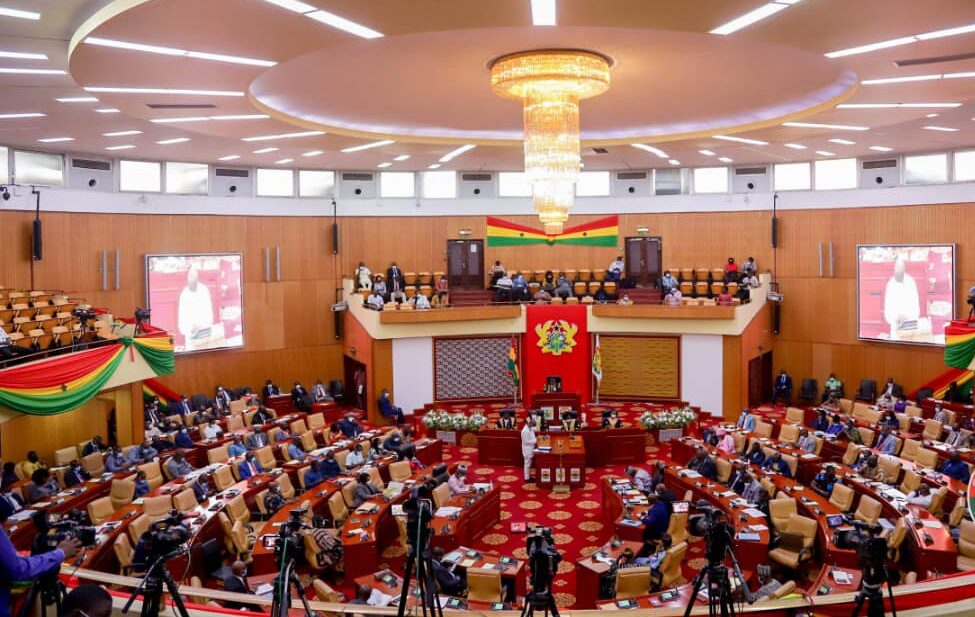

Parliament has officially passed the Human Sexual Rights and Family Values Bill, widely known as the anti-LGBTQ+ bill, following the adoption of some amendments.
The Bill successfully passed its third reading after lawmakers fast-tracked final consideration
Under the amended bill, persons who offer legal advice or legal representation to individuals identified as LGBTQ will not face punishment. Journalists and media organisations reporting on LGBTQ-related matters or current affairs in the course of their professional duties are also exempted.
In addition, medical professionals, including those providing surgical, psychological, counselling, or other healthcare services to LGBTQ persons, will not be penalised under the legislation.
Also read: GRA targets GH¢310bn tax revenue by 2028 as digital compliance expands
The passage marks a major milestone for the Human Sexual Rights and Family Values Bill, which was reintroduced in Parliament in 2025 following the change in government.
An earlier version of the legislation had been passed by the previous Parliament in 2024 but expired without presidential assent under the Akufo-Addo administration due to legal challenges and constitutional concerns raised by rights groups and stakeholders.
The newly approved bill will now be transmitted to President John Dramani Mahama for assent.
Speaking on the floor of Parliament after the bill was passed, Majority Leader Mahama Ayariga insisted that the government remained committed to ensuring the bill becomes law.
“It’s a promise that was made that the bill would be passed and upon passage would be assented to by President John Dramani Mahama,” he stated.
According to him, the only delay in securing presidential assent was the absence of the President from the country and the need to finalise printing of the bill.
Mr. Ayariga dismissed claims by the Minority that the legislation had been watered down, insisting that the core objectives of the bill remained intact.
“This bill is not watered down. This bill prohibits any practice of LGBTQ in this country. This bill prohibits any promotion of LGBTQ in this country,” he stressed.
The Majority Leader explained that some amendments introduced by the committee were intended to clarify constitutional protections relating to legal representation, media reporting, and medical services.
He argued that lawyers defending accused persons, media organisations reporting on LGBTQ-related matters, and healthcare providers offering services should not automatically be accused of promoting LGBTQ activities.
According to him, those clarifications were consistent with constitutional provisions and would likely have been upheld by the courts even without explicit amendments.
Mr. Ayariga accused the Minority of attempting to mislead the public by claiming the legislation had been diluted.
However, Minority Leader Alexander Kwamena Afenyo-Markin criticised the Majority, describing the passage of the bill as an unprincipled political act.
He accused the National Democratic Congress (NDC) government of hypocrisy, arguing that while the party resisted proposed amendments to the bill while in opposition, it had now introduced changes after assuming power.
“They amended and diluted the same law. Such double standards do not pass for men with principles,” Afenyo-Markin charged.
He argued that the revised bill presented by the current government differed from the original version previously pushed under former President Nana Addo Dankwa Akufo-Addo.