

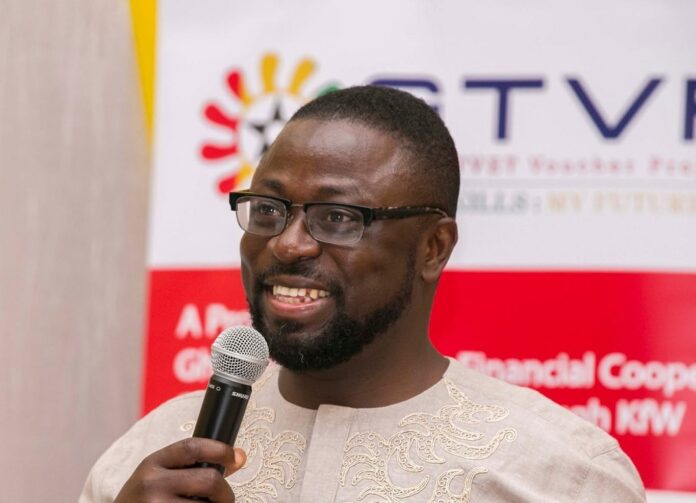

The Member of Parliament for Offinso North, Dr. Fred Kyei Asamoah, has called for a major national shift in Technical and Vocational Education and Training (TVET), urging Ghana to adopt key elements of Germany’s globally acclaimed dual vocational system to drive industrial growth and youth employment.
Ghana’s long-term economic transformation, he said, depends on building a highly skilled workforce capable of meeting modern industrial and technological demands.
Presenting a statement in Parliament on Wednesday, Dr. Asamoah described TVET as a strategic pillar for economic development, job creation, and national competitiveness.
Also read: They lied for power – Afenyo-Markin accuses NDC of betraying voters
He stressed that countries that invest in skills development are better positioned to achieve sustainable industrialisation.
Dr. Asamoah mentioned Germany’s dual vocational training system as a successful global model, noting its strong integration of classroom learning with hands-on industry experience.
He pointed out that the German system accommodates over 1.2 million apprentices across thousands of training companies and vocational institutions, with structured pathways that ensure strong employment outcomes after training.
According to him, the success of the model lies in its strong collaboration between government, industry, labour unions, and training institutions, all working together to design curricula, set standards, and certify skills.
He noted that apprentices in Germany are not only trained in real workplaces but are also paid during their training period, making vocational education both attractive and practical for young people.
Dr. Asamoah observed that the system has contributed significantly to Germany’s low youth unemployment rate and strong industrial base, positioning the country as a global leader in manufacturing and innovation.
Ghana, he said, can draw important lessons from this model to strengthen its own TVET framework and improve outcomes for young people entering the job market.
Among the key reforms he proposed were stronger industry participation in curriculum development, expanded apprenticeship opportunities, increased private sector investment in skills training, and continuous upgrading of training facilities to meet modern standards.
He also called for the elevation of TVET as a respected career pathway, backed by professional certification systems that are widely recognised by employers and industry stakeholders.
According to Dr. Asamoah, a more coordinated national skills system will help Ghana reduce youth unemployment, boost productivity, and accelerate industrial growth.
He stressed that as global economies evolve under the influence of artificial intelligence and advanced technologies, Ghana must equip its young population not only to seek employment but also to innovate, create enterprises, and compete globally.
He urged government, Parliament, industry players, and development partners to deepen collaboration in building a robust TVET ecosystem capable of supporting Ghana’s long-term development agenda.