


Never before has the ordinary person possessed so much power to communicate with so many people.
With a smartphone and internet connection, anyone in Ghana can become a broadcaster, commentator, advertiser, citizen journalist, or social critic. A Facebook post can reach thousands. A TikTok video can travel across continents.
A WhatsApp message can move from one family group to another until its source becomes almost impossible to trace.
This democratisation of communication is one of the remarkable achievements of the digital age. Social media has given ordinary people a voice and created opportunities for business, education, advocacy and community building.
Also read: US-based Ghanaian musician Vudumane releases chart-topping single ‘Pick It Up’
But it has also created an uncomfortable question: When everyone has a platform, who takes responsibility for what is communicated?
From gatekeepers to smartphones
Traditional mass communication placed considerable power in the hands of editors, journalists and broadcasters. Professional media organisations were expected to verify information and consider ethical and legal implications before publication.
Social media has disrupted this structure.
Today, the citizen with a smartphone may report an incident before a journalist arrives. This can be valuable, particularly during emergencies and significant public events.
The difficulty is that access to a communication platform does not automatically provide the ethical judgement, verification skills or professional discipline required for responsible mass communication.
We have expanded our ability to publish faster than we have developed our culture of responsible publishing.
The race to be first
Someone witnesses an incident and immediately goes live. Another receives a voice note and forwards it to several groups. A screenshot appears, and within minutes, people begin drawing conclusions.
The first question is often: “Have you seen this?”
Perhaps, the more important question should be: “Is this true?”
Being the first to share information may generate attention, likes and followers, but inaccurate information can damage reputations and create unnecessary fear.
Responsible communication requires a moment between receiving information and distributing it: a moment for verification.
Who produced this information? What is the original source? Is the date correct? Has the photograph been taken from another event? Is the video complete? Has the person being accused been given an opportunity to respond?
Speed may attract attention. Accuracy builds credibility.
The screenshot has become evidence
One striking feature of our digital culture is the authority we sometimes give to screenshots.
A screenshot appears with somebody’s name or photograph attached and it is immediately treated as proof.
But screenshots can be edited. Accounts can be impersonated. Images can be removed from their original context.
The emergence of artificial intelligence makes this problem even more complicated. Images, audio, and video can increasingly be manipulated or generated convincingly.
The old assumption that “seeing is believing” therefore deserves reconsideration.
In today’s communication environment, seeing should sometimes be the beginning of verification, not the end of it.
When ordinary people become judges
Another troubling feature of social media communication is the speed with which allegations become verdicts.
A person is accused of wrongdoing and, before an investigation is completed, social media may already have conducted its own trial.
Comments declare the person guilty. Insults follow. Photographs of relatives may be circulated. Employers and institutions may be tagged.
Sometimes the allegation may eventually prove justified. Sometimes it may not.
The important principle is that an accusation is not automatically proof.
Responsible communication requires us to distinguish between “someone has been accused” and “someone has been proven responsible.”
That distinction may appear small linguistically, but it can be enormous ethically.
Our language also matters
Responsible communication is not only about whether information is true. It is also about how we communicate it.
Ghanaian social media spaces can sometimes turn disagreement into personal warfare.
Instead of challenging an argument, we attack the individual. Instead of saying, “I disagree because…”, we insult someone’s intelligence, appearance, family, education or background.
This is where critical thinking and communication ethics intersect.
A strong argument does not become stronger because it is accompanied by an insult.
We should be capable of disagreeing strongly without destroying human dignity.
The dangerous power of “forwarded as received”
Perhaps, one of the most convenient expressions in our digital vocabulary is “forwarded as received.”
It appears to remove responsibility from the sender.
But does it?
If I receive an unverified claim and deliberately distribute it to 100 other people, can I completely escape responsibility simply because I did not create it?
Communication involves choices. We choose what to post, what to forward, what to comment on and what to ignore.
Responsible communication, therefore, requires us to recognise that sharing information makes us participants in its circulation.
“Forwarded as received” should not mean “forwarded without responsibility.”
Universities must go beyond technical skills
Educational institutions also have an important role.
We teach students how to write, make presentations, conduct research and increasingly use digital technologies. But digital communication education must also address verification, media literacy, critical thinking and communication ethics.
Students should learn to ask: Who created this message? For what purpose? What evidence supports it? What information is missing? Who could be harmed if it is inaccurate?
These are no longer questions only for journalism students.
They are necessary questions for every citizen with a smartphone.
Freedom needs responsibility
Social media should remain a space where people can participate in public conversation. Its capacity to give ordinary people a voice should be protected.
But freedom of expression and responsible expression should not be treated as enemies.
Having the freedom to communicate does not remove the responsibility to communicate carefully.
Before we post, forward or comment, perhaps we should develop a simple digital habit:
Is it true? Is it verified? Is it necessary? Could it unfairly harm someone? Am I contributing information or merely increasing the noise?
Ghana does not necessarily need fewer voices online.
We need more responsible voices.
Technology has placed a publishing platform in our hands. What we do with that power is now a question of character, judgement and responsibility.
Everyone may have a platform, but everyone must also learn that having a platform comes with responsibility
Source: Patience Calys-Tagoe
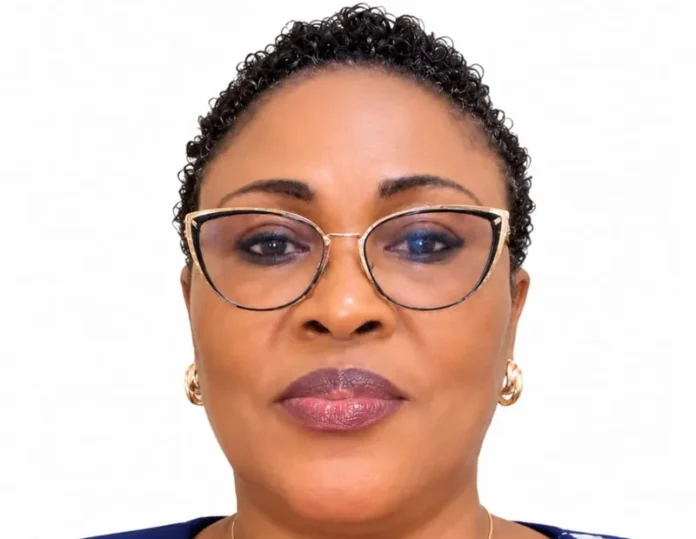
The writer is a university lecturer with academic interests in Communication Skills, Critical Thinking, Language and Research. Her teaching and research interests include effective communication, critical reasoning, and the influence of contemporary communication practices on individuals and society.
Email: patoo28@yahoo.com