

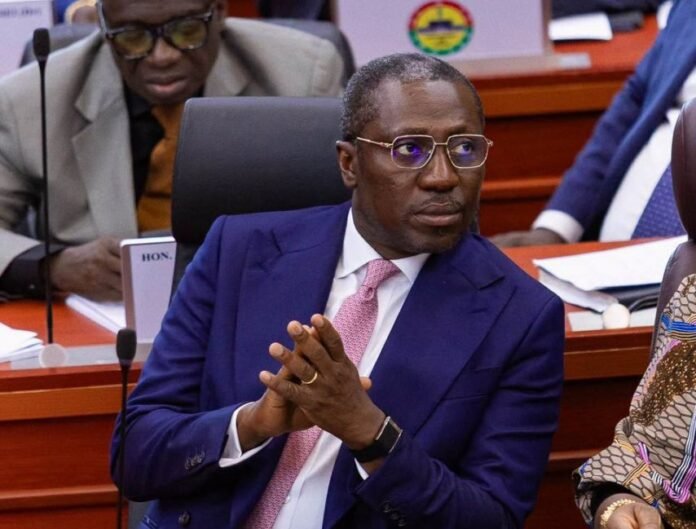

Minority Leader Alexander Afenyo-Markin has challenged the government to translate its economic recovery claims into tangible improvements in the living conditions of Ghanaians, insisting that falling inflation and improving economic indicators must be reflected in the pockets of ordinary citizens.
According to him, the government’s narrative of economic stability and growth has yet to convince many households and businesses struggling with the cost of living.
He argued that although the Finance Minister, Dr Cassiel Ato Forson, had presented figures suggesting an improving economy, the real test of the budget is whether Ghanaians could feel the benefits in their daily lives.
Also read: Bagbin fires stern warning at ‘talkative’ MPs: ‘Parliamentary officers are keeping tabs on you’
“Today, we speak not for our party, but for a market woman, a student, a parent, and a small business owner who are all asking the same question: What has changed in their pockets?” he asked.
Contributing to the debate on the 2027 Budget Statement in Parliament on Thursday, November 26, Mr Afenyo-Markin said the government’s economic performance appears impressive on paper but remains disconnected from the realities confronting ordinary people.
“A market woman cannot eat paper. The student cannot pay school fees with a government statement. The parent counting coins at the end of the month cannot feed a child with a number,” he said.
The Minority leader described Ghana as having two economies: one reflected in government speeches, official statements and social media communications, and another experienced by households, traders and struggling entrepreneurs.
He maintained that the government’s economic narrative would remain unconvincing unless the reported improvements in prices and growth translated into meaningful relief at markets and in businesses.
“If prices come down on paper, but not at the market, who has been helped? If the numbers go up, but the small business owner is still closing a shop, who has been served?” he questioned.
He also criticised the government for introducing the concept of a “New Economy” while, in his view, failing to demonstrate the results of its earlier promises, including the 24-hour economy and investments expected to create employment.
“Agreements on paper are not factories on the ground. Announcements are not jobs in the hands of our young people,” he said.
Mr Afenyo-Markin also questioned the government’s record on job creation, arguing that young graduates continue to demand employment opportunities without receiving satisfactory answers.
The Minority, he said, is not merely seeking to win a parliamentary vote but wants to draw attention to what it considers the government’s failure to honour its promises to the electorate.
He urged the Finance Minister and the government to make the ordinary Ghanaian’s economic experience the ultimate measure of success.
“Let the people feel the change you say you have made in their pockets, not just on paper,” he said. “We are not interested in your paper economy. We want to feel the economy in our pockets.”