
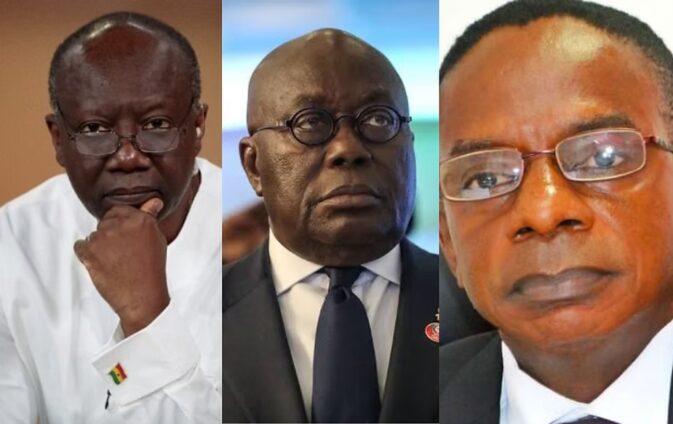

A years-long investigation has raised serious questions about the accuracy of the Auditor-General’s special audit into Ghana’s COVID-19 expenditure, particularly the amount spent on fumigation during the pandemic.
The investigation found that the Auditor-General’s report recorded GH¢96.3 million as the cost of COVID-19 fumigation, while documents from three ministries indicate that the government spent at least GH¢780 million on fumigation exercises between 2020 and 2022.
According to the investigation, the Auditor-General’s figure represents only about 12% of the total COVID-19 fumigation expenditure uncovered. The actual amount could be higher because other state institutions, including the police, prisons and military, also undertook fumigation and disinfection exercises.
Also read: Oil crisis: Gulf producers could cut crude output by 60% – COMAC
The findings have therefore raised questions about how comprehensively the Auditor-General’s special audit captured COVID-19-related expenditure.
Auditor-General’s COVID-19 audit
The special audit was requested in July 2022 by then Finance Minister Ken Ofori-Atta to examine COVID-19 expenditure by ministries, departments and agencies from 2020 to June 2022.
The Auditor-General’s report, dated December 30, 2022, stated that Ghana sourced GH¢21.8 billion from the Contingency Fund, World Bank, International Monetary Fund, African Development Bank, European Union and Bank of Ghana COVID-19 bonds to finance the country’s COVID-19 response and related budgetary support.
One of the objectives of the audit was to determine whether the financial records fairly presented COVID-19 fund receipts and payments.
However, the investigation by journalist Manasseh Azure Awuni alleges that the special audit significantly understated the cost of fumigation despite the availability of expenditure information from ministries that implemented the exercises.
Education Ministry spent GH¢316m on fumigation
Documents obtained from the Ministry of Education show that the ministry undertook three phases of fumigation ahead of the reopening of schools.
The first contract, signed on July 24, 2020, between Zoomlion Ghana Limited and the Ghana Education Service, was valued at GH¢100.99 million.
A second contract signed on September 24, 2020, cost GH¢96.32 million, while a third contract signed on March 1, 2021, was valued at GH¢118.86 million.
The three contracts brought the Ministry of Education’s COVID-19 fumigation expenditure to approximately GH¢316.1 million.
The investigation found that the GH¢96.3 million captured by the Auditor-General as the cost of fumigation corresponded only to the second phase of the Education Ministry’s exercise—the least expensive of the three phases.
Local Government Ministry’s GH¢299m expenditure omitted
The Ministry of Local Government, Decentralisation and Rural Development reportedly spent a further GH¢299 million on three phases of market fumigation between April and November 2020.
The first contract, awarded to Zoomlion using single-source procurement, cost GH¢76.6 million. The Public Procurement Authority subsequently ratified the contract.
A second contract signed in June 2020 was also valued at GH¢76.6 million, while a third contract signed in November 2020 cost GH¢145.8 million.
The investigation states that none of these expenditures was included in the Auditor-General’s reported figure for the “cost of fumigation”, even though the ministry had submitted information on its expenditure for auditing.
The Ghana Audit Service later confirmed that the Local Government Ministry’s fumigation expenditure had been audited but did not explain why the spending was not reflected under the fumigation costs in the special audit report.
Transport Ministry spent GH¢159.9m
The investigation also identified GH¢159.9 million spent by the Ministry of Transport on fumigation in 2020, 2021 and 2022.
The ministry spent GH¢31.98 million in 2020 and another GH¢31.98 million in 2021.
In 2022, however, the expenditure increased sharply to GH¢95.9 million, despite the pandemic’s impact having diminished and Ghana having largely returned to normal activities following vaccination.
The Ministry of Transport confirmed the figures but declined to release the contracts, citing commercial information and the potential impact of disclosure on the service provider’s competitive position.
The Ghana Airports Company Limited, which falls under the Transport Ministry, separately reported spending GH¢4.6 million on COVID-19 fumigation and disinfection between 2020 and 2022.
Zoomlion received about GH¢775m
Of the GH¢780 million in COVID-19 fumigation expenditure identified by the investigation across the three ministries, approximately GH¢775 million, or 99.4%, went to Zoomlion Ghana Limited.
The investigation also highlights previous concerns raised by state institutions and international bodies about Zoomlion’s contracts.
The World Bank previously blacklisted the company for two years after it acknowledged misconduct involving bribes connected to a World Bank-financed project.
The Auditor-General also described Zoomlion in 2019 as a “fraudulent drain on the country” following findings concerning another fumigation contract.
A December 2025 report submitted to Cabinet by the Finance, Local Government, and Youth Development ministers described Zoomlion’s extensive involvement in Ghana’s sanitation sector as a potential “security risk”, arguing that its numerous contracts created the impression of an autocratic monopoly.
Audit Service responds to omission concerns
The Ghana Audit Service has rejected the suggestion that the omission of the Local Government Ministry’s fumigation expenditure meant the spending was not audited.
In correspondence cited by the investigation, the Audit Service said the absence of the ministry’s fumigation and disinfection expenditure from the special audit report did not mean the expenditure itself had not been audited.
The Audit Service also confirmed that it audited Phases One and Two of the Ministry of Education’s COVID-19 expenditure but did not explain why only Phase Two was presented as the cost of fumigation.
Former Auditor-General Daniel Domelevo said a special audit of COVID-19 expenditure should have covered the full expenditure of funds raised for the pandemic.
He also questioned the legal basis for the Finance Minister initiating the special audit, arguing that the Minister of Finance was himself a major spending officer and an auditee.
According to Mr Domelevo, such a situation raises questions about the independence of the audit process.
The investigation also examined the scientific basis for Ghana’s mass COVID-19 fumigation programme.
Scientists involved in Ghana’s COVID-19 response questioned the effectiveness of spraying schools, streets and other public spaces, particularly after facilities had remained closed for extended periods.
Dr J.H. Kofi Bonney of the Noguchi Memorial Institute for Medical Research said there was little justification for disinfecting a school that had remained closed for three months, while Dr Agustina Angelina Siverkern of the Kumasi Centre for Collaborative Research in Tropical Medicine similarly questioned whether such fumigation would effectively target the virus.
Professor Gordon Awandare of the West Africa Centre for Cell Biology of Infectious Pathogens also said a place that had been closed for several months would likely no longer harbour viable coronavirus on surfaces.
The World Health Organisation had also issued guidance in May 2020 discouraging routine indoor spraying or fogging and outdoor spraying of streets and marketplaces as a method of killing COVID-19.
The WHO cited concerns over effectiveness and potential health risks associated with disinfectant spraying.
Existing fumigation contracts raise further questions
The investigation found that Ghana already had nationwide fumigation arrangements before the COVID-19 pandemic.
Zoomlion had standing contracts with metropolitan, municipal and district assemblies to fumigate and disinfect markets, lorry parks, public toilets and other public spaces.
There was also a separate nationwide fumigation arrangement involving the Ministry of Health.
The investigation argues that these existing contracts potentially covered many of the locations targeted under the additional COVID-19 fumigation programme.
Some assemblies also reportedly had their own capacity to conduct fumigation but were instructed to suspend their activities to allow Zoomlion to undertake additional COVID-19-related exercises.
The Kwahu North District Assembly, for instance, said it had equipment capable of fumigating public places, while the Accra Metropolitan Assembly had also been conducting spraying exercises with support from UNICEF.
Investigation calls attention to accountability
The findings put the spotlight on the government’s handling of COVID-19 funds and the systems used to account for emergency expenditure during the pandemic.
The investigation says the Auditor-General’s reported GH¢96.3 million*in fumigation expenditure does not reflect the much larger expenditure identified from ministry records, contracts and responses to information requests.
It also raises broader questions about procurement, value for money and whether taxpayers received adequate benefit from the hundreds of millions of cedis spent on fumigation.
The findings come against the backdrop of a December 2025 ministerial report that called for the cancellation of 253 nationwide fumigation agreements, citing concerns about value for money, accountability and complaints over payments for work allegedly not done or chemicals whose quality could not be verified.
The investigation was produced under the Pledge Against Corruption Ghana project, supported by the UK International Development, with the Africa Centre for Energy Policy, Transparency International Ghana and the Ghana Anti-Corruption Coalition as partners.
Myjoyonline