


Foreign investors will no longer be required to meet minimum capital thresholds before establishing businesses in most sectors of Ghana’s economy following the passage and presidential assent of the new Ghana Investment Promotion Centre (GIPC) Act.
The reform removes one of Ghana’s most debated investment requirements and is expected to make the country more attractive to foreign investors seeking to establish businesses and expand their operations.
The only major exception is the trading sector, where foreign investors are now required to inject US$500,000 in cash. The new requirement replaces the previous arrangement, which allowed the minimum capital threshold to be met partly through imported goods.
Also read: Mahama mourns Ya-Na Abukari II, describes death as national loss
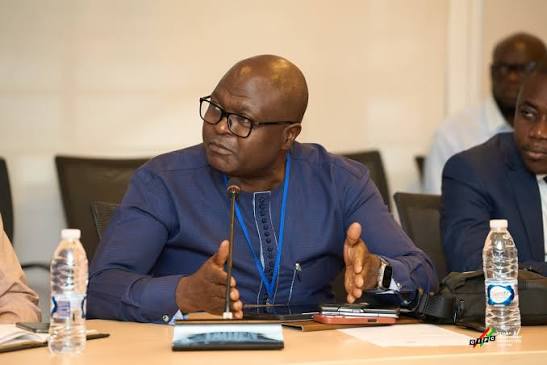
Chief Executive Officer of the Ghana Investment Promotion Centre, Simon Madjie, said the removal of the minimum capital requirement directly responds to concerns that have been raised repeatedly by foreign investors.
“For investors who’ve been complaining about the minimum capital requirement, that has been eliminated, you know, by the passage of the new law. Except for trading, those in a trading enterprise, they must now bring in a cash amount of $500,000. No longer have goods, but a cash amount of $500,000,” he said.
The change is expected to reduce barriers to entry for foreign investors in most sectors while creating a more flexible investment environment in Ghana.
The new GIPC Act also establishes a National Investment Registry, which will serve as a central database for tracking investments in Ghana.
According to Simon Madjie, the registry is expected to strengthen investment monitoring and provide better data on investments operating within the country.
The new legislation also creates a framework aimed at supporting Ghanaian companies that have successfully expanded domestically to explore opportunities in international markets.
“We are also going to encourage Ghanaian businesses who have expanded in-country to go abroad, to expand their operations abroad. The objective is ultimately to create some of the global businesses that we see around by encouraging our Ghanaian businesses to do the same,” Mr Madjie said.
Another significant feature of the new GIPC Act is the introduction of a legal framework for an investment-by-citizenship programme.
Mr Madjie said the programme will be developed in collaboration with the Ministry of the Interior, with the specific modalities to be determined as implementation progresses.
“There’s also an interesting part, which is setting the tone for investment by citizenship. Working with the Minister of Interior to come up with the modalities for that. All of these are in the new Act that has been assented to by the President,” he said.
The initiative could form part of Ghana’s broader efforts to attract international capital and high-value investors while establishing a regulated framework for investment-linked citizenship.
The new legislation also changes the name and status of the Ghana Investment Promotion Centre to the Ghana Investment Promotion Authority.
Mr Madjie explained that the change reflects the expanded responsibilities of the institution, which has historically been involved in both investment promotion and regulation.
“We’ve been promoting investment, and we’ve also been regulating investment. So, the Authority just reflects the true nature of the work that we’ve been doing for all these years,” he said.
The new GIPC Act represents a major overhaul of Ghana’s investment framework and is expected to reshape how foreign and domestic investments are regulated and monitored.
By removing minimum capital requirements for foreign investors in most sectors, the government aims to lower barriers to entry and strengthen Ghana’s position as an attractive destination for foreign direct investment.
At the same time, the new law introduces stronger investment monitoring through the National Investment Registry and seeks to support the expansion of Ghanaian businesses beyond the domestic market.
The reforms are expected to play a key role in Ghana’s efforts to attract foreign capital, promote domestic enterprise and create globally competitive Ghanaian companies.
CNR