
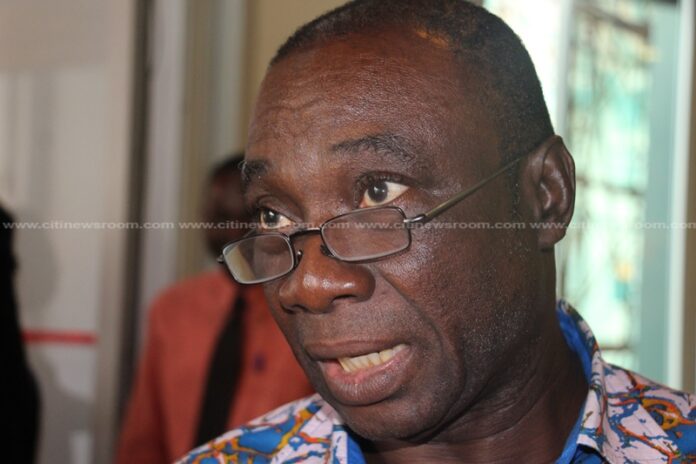

Former Minister for Power Dr Kwabena Donkor has denied allegations linking him to the Asante Berko bribery case, insisting that he does not know of any demand or receipt of money or personal benefit connected to the matter.
In a statement, his lawyers said their client “absolutely” has no knowledge of the allegations linked to him and emphatically denies any knowledge of a request or demand for money.
Dr Donkor acknowledged that he was the Minister for Power during the period relevant to the Asante Berko bribery case, describing the fact as a matter of public record.
Also read: The Second Meeting of the Second Session of the Ninth Parliament
He also confirmed that the government, through the Ministry of Power, negotiated with ASKA Energy for the generation of electricity in Ghana during the period.
According to him, the negotiations took place during one of Ghana’s most severe power crises
when the country was experiencing extensive load-shedding.
His lawyers explained that a technical team made up of representatives from relevant electricity-sector institutions was subsequently sent to Istanbul, Turkey, to inspect equipment intended for the generation of electricity in Ghana.
The statement described the inspection as a regular pre-shipment procedure.
Dr Kwabena Donkor insisted that he had never met Asante Berko and at no point during the negotiations did he see Berko.
“He has never met the said Mr Asante Berko all his life,” the lawyers stated.
Dr Donkor also denied discussing any personal benefit with Berko or any other person in connection with the power project.
Dr Donkor further denied receiving money or any other personal benefit from Berko or anyone else.
According to his lawyers, he never discussed any personal benefit with Asante Berko or any other person; never authorised anyone to discuss such matters on his behalf; never received money, whether in cedis or dollars, or any other personal benefit from Berko or another individual; and had no knowledge of anyone allegedly making a criminal demand in his name.
The lawyers said anyone who may have made such a demand did so for their own benefit and without Dr Donkor’s authority.
The former Power Minister also questioned whether evidence presented during the U.S. trial actually established any criminal conduct on his part.
His lawyers said Dr Kwabena Donkor does not understand how any evidence led during the trial could link him to demanding or receiving money or anything of value personally.
He also rejected any suggestion that claims by other individuals that they required money from their principals for the benefit of a “Senior Ghana Official” could automatically be interpreted as evidence of criminal wrongdoing against him.
Cavendish Chambers has warned that publications or statements that contradict Dr Donkor’s position and seek to damage his reputation or integrity could trigger legal action.
They further warned that any publication or statement of any kind that could be interpreted as impugning the former minister’s reputation and integrity “shall result in immediate legal proceedings.”
The Asante Berko bribery case centres on allegations that payments were made to Ghanaian officials in an attempt to secure an Emergency Power Agreement for a Turkish energy company.
Berko, a former senior executive at Goldman Sachs, was convicted in the United States on charges including conspiracy to violate the Foreign Corrupt Practices Act, violation of the FCPA and conspiracy to commit money laundering.
The case involved a proposed power project in Ghana and allegations concerning payments allegedly channelled through intermediaries.
Dr Kwabena Donkor rejected any suggestion that he personally demanded or received money in connection with the transaction.
His position, as communicated through his lawyers, is that he had no personal dealings with Berko and did not authorise anyone to seek any benefit on his behalf.