

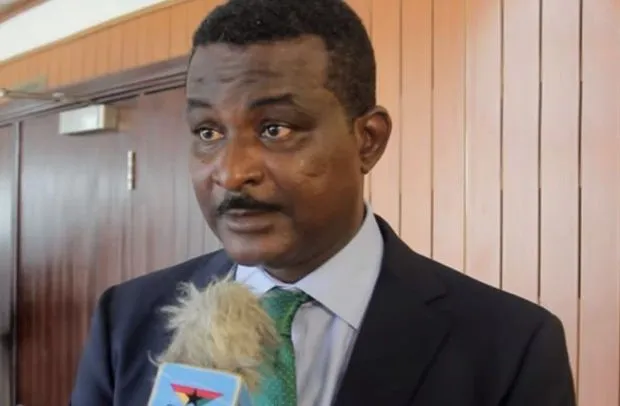

Deputy Majority Leader and MP for Cape Coast South, Kweku Ricketts-Hagan, has dismissed suggestions that the Mahama administration’s New Economy agenda is replacing the government’s flagship 24-Hour Economy policy.
He described the latter as an integral component of the broader economic transformation strategy.
According to him, the two initiatives serve different but complementary purposes, with the New Economy providing the broader framework for economic transformation while the 24-Hour Economy focuses on private sector-led expansion of production and business activities.
Also read: GH¢59bn 2027 bank borrowing: Amin Adam warns of gov’t plot to crowd out private sector
Contributing to the debate on the 2027 Budget Statement and Economic Policy in Parliament on Wednesday, November 18, Ricketts-Hagan explained that the New Economy is government-led, while the 24-Hour Economy is designed to be driven primarily by the private sector.
“The 24-hour economy is not the same as the New Economy. The best you can say is that the 24-hour economy is actually a subset of the New Economy,” he told Parliament.
He explained that under the New Economy framework, government was taking responsibility for financing the preparatory work and infrastructure required to support economic transformation.
In contrast, the 24-Hour Economy policy would depend on private sector participation, with government providing the necessary funding and operational structures to enable businesses to expand production and operate beyond conventional working hours.
Ricketts-Hagan said the New Economy was intended to move Ghana away from exporting raw materials towards adding value to its natural resources and other products, while creating employment opportunities and improving productivity.
“The New Economy is for value addition. The New Economy, in that process of growing, is to create jobs,” he stressed.
He argued that the distinction between the two initiatives is important because the government has first focused on restoring macroeconomic stability before introducing a broader economic growth agenda.
According to him, the Mahama administration’s economic management strategy has followed three stages: stabilising the economy in its first year, consolidating the gains in the second year and positioning the country for accelerated growth.
“Now we are at a point where the economy is ready to take off, and that is why Dr Ato Forson has introduced this ‘New Economy’,” he said.
The Deputy Majority Leader also defended the government’s expenditure strategy, insisting that the improvement in economic indicators is the result of fiscal discipline rather than excessive borrowing and spending.
The current administration, he said, has adopted expenditure-based fiscal consolidation, which involves aligning government spending with available revenue, instead of relying heavily on borrowing to finance expenditure.
Ricketts-Hagan maintained that the approach has helped restore confidence in the economy and create room for investments in productive sectors.
He cited government expenditure as a percentage of GDP, which he said increased from 17.8 per cent in 2025 to 18.9 per cent in 2026 and is projected to reach 21.6 per cent in 2027.
He rejected claims that the government is not spending, arguing that the focus is on directing public resources towards sectors capable of generating economic growth and employment.
He credited President John Dramani Mahama and Finance Minister Dr Cassiel Ato Forson with improving Ghana’s economic conditions, citing declining inflation and interest rates as evidence of the turnaround.
He also defended the GoldBod initiative, describing it as a game changer that would enable Ghana to retain more value from its gold resources and reduce dependence on expensive external borrowing.
According to him, the New Economy agenda, supported by value addition, increased productivity and private sector participation, would position Ghana for sustainable growth and create employment opportunities, particularly for the country’s unemployed youth.
He urged Parliament to support the 2027 Budget, arguing that its proposed expenditure priorities would help consolidate the economic gains and accelerate the country’s development.