

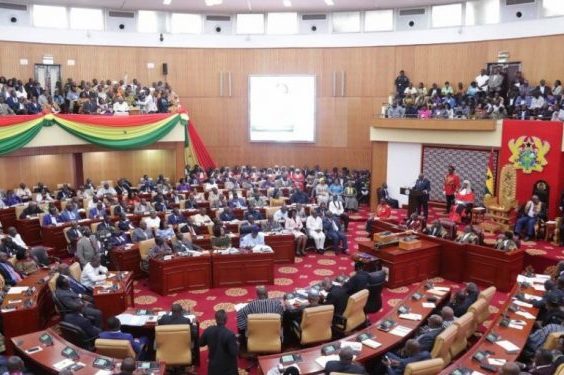

Parliament has passed the Tribunals Bill, 2026, clearing the final legislative hurdle after lawmakers approved the Bill at its third reading.
The passage of the Bill marks a significant milestone in Ghana’s judicial reform agenda and sets the stage for the reintroduction of tribunals under a new legal framework aimed at improving access to justice and strengthening the administration of justice.
The legislation will now be forwarded to President John Dramani Mahama for presidential assent before it becomes law.
Also read: Justice D. F. Annan Legacy: The democratic foundation Ghana must protect
Waiver for third reading
Before the Bill was passed, the Attorney-General and Minister for Justice, Dr Dominic Ayine, successfully moved a motion seeking permission for the House to proceed with the third reading on the same day.
Dr Ayine asked Parliament to waive the requirement under Order 172(1) of the Standing Orders, which ordinarily requires at least one sitting day to elapse between the consideration stage and the third reading of a Bill.
“May I move that, notwithstanding the provision in Order 172, sub-order 1 of the Standing Orders… the motion for the third reading of the Tribunals Bill, 2026 may be moved today. I so move, Mr Speaker,” he stated.
Following approval of the procedural motion, Parliament proceeded with the third reading and subsequently passed the Bill.
Access to justice
The Tribunals Bill, 2026 seeks to re-establish tribunals within Ghana’s judicial system under a revised constitutional framework.
According to the Attorney-General, the legislation is intended to: Improve access to justice across the country; Reduce delays in the court system; Strengthen the administration of justice; and restore tribunals with enhanced constitutional safeguards, oversight mechanisms and protections for due process and human rights.
The Bill operationalises Article 126 of the 1992 Constitution, which provides for tribunals as part of Ghana’s judicial structure.
Parliamentary scrutiny
Before its passage, the Bill underwent detailed scrutiny after being referred to Parliament’s Constitutional and Legal Affairs Committee and the Judiciary Committee.
The committees examined the proposed legislation and submitted their recommendations before the House considered and approved the Bill.
With Parliament having completed the legislative process, the Tribunals Bill will now be transmitted to President Mahama for assent.
Once signed into law, the legislation will formally pave the way for the establishment of a new tribunal system under the safeguards outlined in the Act, marking one of the government’s key judicial reform initiatives.