

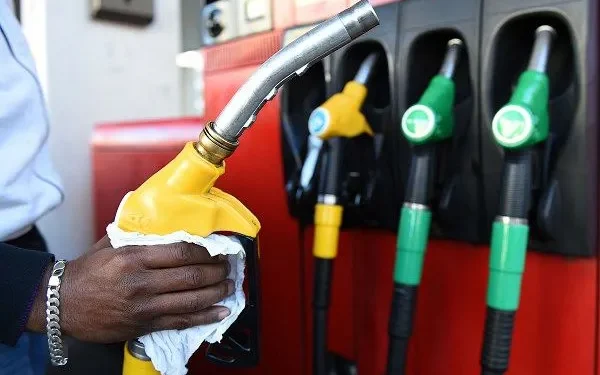

Petrol prices could fall in the second half of November if a sharp drop in world crude oil prices holds, the Chamber of Petroleum Consumers says.
Duncan Amoah, the chamber’s executive secretary, told Citi FM’s Eyewitness News on Thursday, November 5, that the crude price had dropped sharply in two days. “Over the past 48 hours, you’ve seen cumulatively more than a 12 to 14% decline in prices of crude oil globally,” he said.
He put any petrol relief in the next pricing window, which the National Petroleum Authority’s Petroleum Products Pricing Guidelines open on the 16th of each month. Refined prices usually take six to seven days to follow crude, he said.
“If all things are equal, and what we have observed since the mid-term elections in America happened is that you have seen prices consistently drop on the international market, our prediction or projection will be that for the second window of November, the cost of petrol, particularly, would have witnessed some reduction,” he said.
Also read: Obuasi SHTS: NPP Women’s Wing marches today as coalition calls for sex-offenders register
For the window that opens on Monday, November 16, the guidelines take the average free-on-board price from 27 October to 11 November. A crude drop in the two days before Thursday sits inside that range.
Refined petrol does not move on the same day as crude. On the lag Amoah described, product prices can still be adjusting as that average closes on Wednesday, November 11.
A fall in refined prices after 11 November would miss this window. It would be counted in December’s first window, which uses free-on-board prices from 12 to 26 November.
Petrol and diesel are deregulated. Each oil marketing company sets its own pump price, and it may not sell below the floor the authority sets for that window.
The NPA has not published a floor for the window that opens on 16 November.
A new price reaches the board only after the company notifies the NPA, by noon on the working day before it takes effect. A change dated Monday, November 16, has to be filed by noon on Friday, November 13.
In the window running from 1 to 15 November, Star Oil cut petrol from GH¢16.45 to GH¢16.38 a litre and raised diesel from GH¢17.95 to GH¢18.45.
The NPA floor for the same window is GH¢15.39 a litre of petrol and GH¢17.41 of diesel. A floor is a minimum. It leaves out traders’ premiums and the margins of importers and marketers, so two stations can charge different prices on the same day.
Separately, NPA chief executive Godwin Kudzo Tameklo said on Thursday that government has absorbed a little over GH¢2 billion so consumers do not take the full rise in world prices. That sum is not a forecast for the next window.
Amoah does not expect diesel to fall as far as petrol. Colder months raise diesel use for heating in Europe, Asia and the Americas, he said, and that demand can hold the price up.
The levy was added under the Energy Sector Levies (Amendment) Act, 2025 (Act 1141).
Other levies under the Energy Sector Levies Act, 2015 (Act 899) still apply. The government has said it will instruct the Ghana Revenue Authority on what follows 30 November. It has not said the GH¢1 is abolished.
Tameklo, on the same programme, described the step without that diesel limit. “Thankfully, and I must say this, the Minister for Finance graciously agreed that for October and November, the GH¢1, that’s the energy shortfall levy, the GH¢1, he’s suspending it,” he said.
Collins Adomako-Mensah, Deputy Ranking Member of Parliament’s Energy Committee and MP for Afigya Kwabre East, told the programme that a pause is not what the Minority asked for.
“We don’t even want to hear the suspension of the one Ghana cedi. That one Ghana cedi, we still insist, should have been abolished,” he said.
He said a suspension only delays the charge. “What this means is that after two months or a month, that one Ghana cedi will come back.”
He tied the objection to the way the levy was built. “We have argued and advised government that if they base the increment on a component that they don’t have control over, anytime that component goes overboard, they’ll be in trouble, which is what we’re experiencing now,” he said.
Tameklo said bulk distributors importing refined products were finding foreign exchange easier to obtain. He credited, in part, the Ghana Gold Board, GoldBod, and the Bank of Ghana, which he said had supported reserves and the dollars those imports need.
He said an October meeting called by Energy Minister Dr John Abdulai Jinapor led Sentuo Oil Refinery and the Tema Oil Refinery to hold the prices they charge bulk distributors at the levels from before the meeting.
Amoah’s warning is that the crude drop can reverse. “We are not completely out of the woods yet because, again, you also hear the United States government indicate that there will be a resumption of hostilities with Iran over the Strait of Hormuz,” he said.
If petrol’s international price does fall, he wants companies to pass it on. “But petrol is likely to come down, and we would be hoping that the OMCs, the BDCs, would let that reduction reflect,” he said.
The price on the board also carries costs that crude does not set. Delays in discharging fuel ships have added up to 60 pesewas a litre in 2026, the Centre for Environmental Management and Sustainable Energy estimates.
3news