


The Minority in Parliament has described convicted New Patriotic Party (NPP) Ashanti Regional Chairman, Bernard Antwi-Boasiako, popularly known as Chairman Wontumi, as a ‘political prisoner’, and raised serious concerns about the fairness of the legal process that led to his conviction.
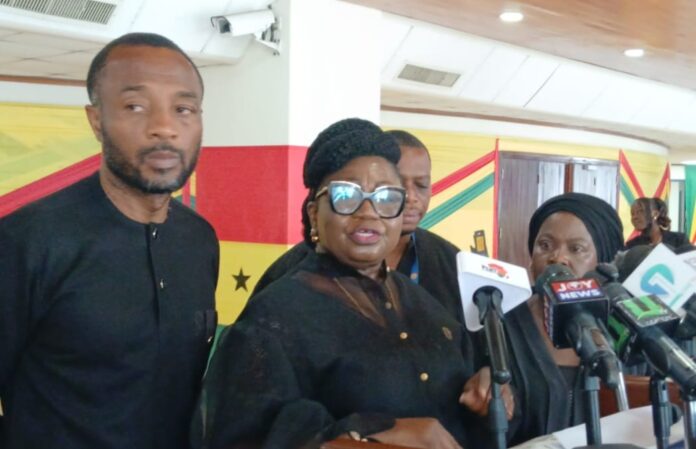
Addressing the media in Parliament on Tuesday, July 21, 2026, Deputy Minority Leader and Member of Parliament for Asokwa, Patricia Appiagyei, said the Minority is not seeking to undermine the Judiciary but is exercising its constitutional responsibility to scrutinise the conduct of the State in matters of public interest.
The statement followed the High Court’s judgment in the case involving Wontumi and Akonta Mining Limited.
Also read: MMDAs spend GH¢22.4m on revenue collectors who generate only GH¢10.26m
The Minority said it respects the Judiciary and does not intend to impugn the integrity of the presiding judge, Justice Kocuvie-Tay. It also stressed that it supported efforts to combat illegal mining, popularly known as galamsey, and would not seek immunity for anyone based solely on political affiliation.
However, Mrs Appiagyei identified four issues which, in the Minority’s view, raised serious constitutional and legal concerns about the case.
The Minority’s first concern relates to the absence of Wontumi’s lead counsel when judgment was delivered.
According to the Caucus, the lawyer’s office had informed the court of a prior professional engagement abroad.
The Minority argued that Article 19 of the 1992 Constitution guarantees an accused person the right to legal representation by a lawyer of their choice.
It cited the trial of businessman and former Chief Executive Officer of the Ghana National Petroleum Corporation (GNPC), Tsatsu Tsikata, arguing that Ghana had previously experienced significant controversy over the issue of an accused person’s right to counsel.
The Caucus said the Court of Appeal’s 2016 acquittal of Mr Tsikata and its criticism of aspects of the trial demonstrated the importance of safeguarding due process.
“If that standard mattered in 2016, it matters today, regardless of whose name sits on the charge sheet,” the Minority said.
The Minority also criticised the trial court’s decision not to refer what it considers serious constitutional questions to the Supreme Court.
It argued that Article 130 of the Constitution reserves the interpretation of the Constitution to the Supreme Court.
The Caucus cited the 2016 Zanetor case, in which the Supreme Court reportedly addressed the jurisdiction of lower courts in determining constitutional questions.
According to the Minority, the High Court should have referred the constitutional issues to the Supreme Court instead of determining that the relevant provision of the Minerals and Mining Act was clear and unambiguous.
The Caucus maintained that the issue could form a basis for an appeal.
The third issue raised by the Minority relates to the court’s treatment of Akonta Mining Limited as a separate legal entity from Wontumi.
Mrs Appiagyei argued that established company law principles recognise a company as a separate legal person from its shareholders and directors.
She cited the longstanding principle established in Salomon v Salomon and Ghana’s own jurisprudence, including Morkor v Kuma.
The Minority contended that the corporate veil should only be lifted in exceptional circumstances, such as where a company is being used as a sham or to perpetrate fraud or evade an existing legal obligation.
According to the Deputy leader, those circumstances were not established in the case.
She argued that the court’s reasoning effectively treated Wontumi and Akonta Mining as one entity for some purposes while convicting them separately.
It warned that the precedent, if left unchallenged, could have implications for businesses across Ghana.
The Minority’s fourth major concern was what it described as selective justice in the enforcement of laws against illegal mining.
The Caucus pointed to investigations involving NDC National Organiser Joseph Yamin and Vice Chairman Yakubu Abanga, as well as allegations involving a government Member of Parliament and another NDC MP who was charged in connection with an anti-galamsey confrontation.
The Minority argued that the absence of comparable prosecutions in those cases had created a perception that the machinery of the State was being applied more aggressively against political opponents.
“A government serious about ending selective justice must prosecute its own with the same vigour it has shown here,” the Caucus stated.
The Minority subsequently called on the Attorney-General to publish the State’s enforcement record on illegal mining across the political divide.
It also urged the Court of Appeal to examine what it described as the denial of counsel of choice, the refusal to refer constitutional questions and the decision to pierce the corporate veil.
The Caucus further called on the Judiciary to reaffirm the legal threshold for referring constitutional questions to the Supreme Court.